
Ortizan C7 Powered Studio Monitors Pair with Bluetooth 5.3, White
4.6Editor score
Affordable Professional Monitoring Sound
Bluetooth 5.3 Wireless Connectivity
3.5 Inch Carbon Fiber Drivers
Multiple Input Options for Versatility
Finding the right monitoring solution is crucial for any music producer or audio engineer. High-quality speakers ensure your mixes translate well across different playback systems and help you make informed creative decisions during production.
We evaluated ten leading models based on sound accuracy, build quality, connectivity options, and value. Each product offers unique strengths for electronic music production, from precise imaging to powerful low-end reproduction.
Each pick highlights key features, pros, and cons to help you choose the best fit for your setup. Note that prices fluctuate often, so check current listings before making your final purchasing decision today.
4.6Editor score

4.8Editor score

4.6Editor score
As an Amazon Associate we earn from qualifying purchases.
This side-by-side comparison highlights the key specifications and strengths of each monitor to help you find the perfect match for your electronic music production needs.



The Yamaha HS5 is a classic reference monitor known for its uncolored sound and reliability. It scores highly among producers who need accuracy for mixing and mastering electronic tracks.
We may earn a commission when you buy through this link, at no additional cost to you.
Its 70-watt bi-amp system delivers powerful dynamics while maintaining clarity across the frequency spectrum. The 5-inch woofer provides sufficient punch for near-field monitoring in small to medium rooms.
While it lacks modern wireless features, the trade-off ensures professional signal integrity. Some may find the bass limited compared to larger models, but adding a subwoofer solves this easily.
Producers seeking a trusted standard for accurate translation should prioritize the HS5. It remains one of the most respected entry-level professional monitors available today.
The flat frequency response ensures your mixes sound consistent on other systems, critical for electronic music production.
Dedicated amplifiers for low and high frequencies allow for cleaner output and greater dynamic range during loud passages.
We may earn a commission when you buy through this link, at no additional cost to you.
The PreSonus Eris E4.5 offers excellent sound quality for its price range. It is an ideal entry point for producers starting their journey into electronic music.
We may earn a commission when you buy through this link, at no additional cost to you.
Its woven-composite woofers deliver tight bass, while the acoustic tuning controls allow you to adapt the sound to your room. Multiple inputs make it easy to connect various devices.
Power output is modest compared to larger monitors, but sufficient for desktop use. Some may wish for more robust build materials, but the performance outweighs these minor concerns.
For those on a budget who need reliable near-field monitoring, the Eris E4.5 is a compelling choice. It delivers studio-quality sound without breaking the bank.
High and low-frequency tuning controls let you tailor the output to fit your specific room acoustics perfectly.
Balanced TRS, unbalanced RCA, and aux inputs ensure you can connect nearly any audio source or interface easily.
We may earn a commission when you buy through this link, at no additional cost to you.
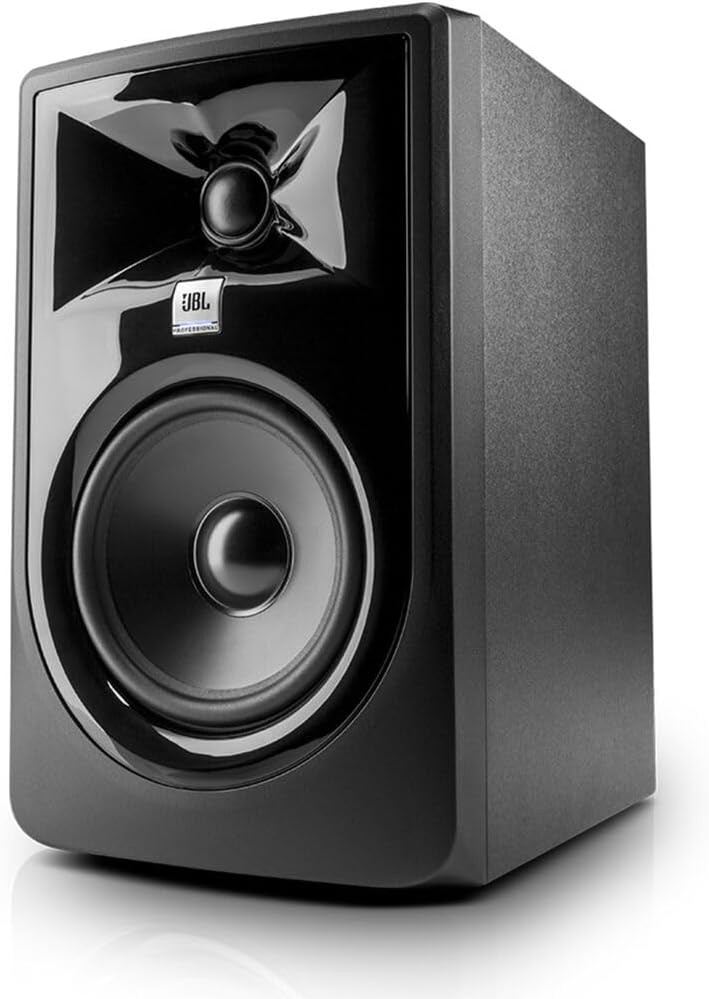
The JBL 305P MkII is renowned for its patented Image Control Waveguide, which delivers precise stereo imaging. This makes it a favorite for producers who need to place instruments accurately in the mix.
We may earn a commission when you buy through this link, at no additional cost to you.
With 82 watts of Class-D amplification, it offers dynamic range and deep bass suitable for electronic music. The boundary EQ and HF trim ensure accuracy regardless of placement.
While it lacks wireless features, its robust design and reliability justify the investment. The sound is refined and powerful, offering a significant upgrade over entry-level options.
For producers needing detailed imaging and room-filling sound, the 305P MkII is an outstanding choice. It combines JBL's 70-year expertise with modern monitoring technology.
This technology expands the sweet spot so you hear accurate stereo imaging from various listening angles in your studio.
Adjustable boundary EQ lets you fine-tune low frequencies to compensate for desk or wall proximity effects.
We may earn a commission when you buy through this link, at no additional cost to you.
The Edifier MR3 stands out with its Hi-Res Audio certification and Bluetooth multi-point connectivity. It bridges the gap between professional monitoring and everyday listening convenience.
We may earn a commission when you buy through this link, at no additional cost to you.
Its flat response ensures accurate monitoring, while the Edifier ConneX app allows for detailed EQ adjustments. The multiple inputs make it versatile for connecting both studio gear and mobile devices.
Power output is lower than larger monitors, which may limit volume in larger spaces. However, for near-field work and casual listening, it delivers rich sound and exceptional flexibility.
If you value wireless convenience alongside professional audio quality, the MR3 is ideal. It offers a modern approach to studio monitoring with robust connectivity options.
Certified for high-resolution playback, ensuring detailed sound quality that captures every nuance of your production work.
Use the app to fine-tune EQ settings for personalized sound or switch modes to suit different listening needs.
We may earn a commission when you buy through this link, at no additional cost to you.
The PreSonus Eris E7 XT delivers deep lows with its 6.5-inch woven composite transducer. It provides a full-range sound suitable for bass-heavy electronic genres.
We may earn a commission when you buy through this link, at no additional cost to you.
Its EBM waveguide ensures solid imaging across a wide sweet spot. Acoustic tuning controls allow precise tailoring to your environment, and included software adds value for new producers.
Being sold individually, pairing requires two units which affects the total budget. Its size may also be too large for tight desktop setups, requiring careful placement.
For producers needing deeper bass without a subwoofer, the E7 XT is an excellent option. It combines high-quality components with flexible tuning capabilities.
The large 6.5-inch woofer provides extended low frequencies essential for monitoring kick drums and basslines in EDM.
Includes Studio One Prime and a Magic plug-in suite, worth over $1000, giving you a complete production start-up kit.
We may earn a commission when you buy through this link, at no additional cost to you.
The Ortizan C7 offers a budget-friendly entry into professional monitoring without sacrificing too much quality. It is perfect for hobbyists or those working in small home setups.
We may earn a commission when you buy through this link, at no additional cost to you.
Its 24-bit DAC minimizes signal loss, ensuring fidelity even with wireless streaming. The balanced TRS input allows connection to professional audio interfaces for studio use.
Bass depth is naturally limited by the small drivers, and low frequencies might not fill large rooms. However, for monitoring clarity and casual listening, it exceeds expectations.
For those with strict budget constraints, the C7 provides a versatile and modern solution. It proves that quality audio can be accessible to everyone.
Bluetooth 5.3 allows quick pairing for streaming music or reference tracks directly from your smartphone or tablet.
Balanced TRS inputs let you connect to mixers or interfaces, bridging home and pro audio needs seamlessly.
We may earn a commission when you buy through this link, at no additional cost to you.
The KALI AUDIO LP-6 V2 offers superior sonic accuracy with its improved DSP system. It is designed to emit sound as it exists in your mix without alteration.
We may earn a commission when you buy through this link, at no additional cost to you.
With 80 watts of power and 115dB max SPL, it handles loud tracks easily. The updated boundary EQ ensures quality output regardless of placement, whether on a stand or desk.
It is sold individually, so you must purchase two for stereo monitoring, which can affect the total cost. Color options remain limited to black, but performance is the priority.
For producers seeking professional-grade performance without the premium price, the LP-6 V2 is unmatched. It delivers exceptional value and accuracy for music production.
The robust DSP system ensures a flat frequency response, giving you the truest representation of your audio mix.
12dB noise reduction and low distortion upgrades ensure clear sounds even at low volumes for detailed mixing.
We may earn a commission when you buy through this link, at no additional cost to you.
The Edifier MR5 combines studio-grade sound with modern connectivity features like LDAC and Bluetooth 6.0. It delivers powerful, detailed audio reproduction with a 3-way crossover.
We may earn a commission when you buy through this link, at no additional cost to you.
Room acoustic tuning via physical knobs or the ConneX app ensures accurate monitoring in various environments. The 110W RMS amplifier provides enough power for medium-sized rooms.
Its advanced features come at a higher price point, and the physical size may be larger than standard near-field monitors. These are acceptable trade-offs for its versatility.
For those wanting premium features and high-fidelity sound in a versatile package, the MR5 is exceptional. It represents the cutting edge of modern home studio monitoring.
Support for LDAC ensures crystal-clear wireless transmission with high-resolution audio quality for detailed production work.
Physical knobs and an app allow deep customization to tailor sound perfectly to your specific room's acoustics.
We may earn a commission when you buy through this link, at no additional cost to you.
The Mackie CR4.5BT combines studio-quality sound with a tone control and Bluetooth for versatile use. It is perfect for both production and casual entertainment scenarios.
We may earn a commission when you buy through this link, at no additional cost to you.
Its tone knob allows you to boost bass or sparkle depending on the activity, while the location switch optimizes it for desktop or bookshelf placement. Inputs cover all needs from interfaces to consoles.
The tone control can color the sound, which may not suit critical mixing but is great for enjoyment. Bass is limited by the driver size, but sufficient for small rooms.
For users needing a versatile speaker for studio work and leisure, the CR4.5BT is ideal. It delivers clear sound with flexibility that fits many lifestyles.
The tone knob shapes the sound for gaming or parties, making it a dynamic tool beyond just standard reference monitoring.
Flip the switch to optimize sound for desktop near-field or bookshelf placement, adapting to your room setup instantly.
We may earn a commission when you buy through this link, at no additional cost to you.
The Yamaha HS8 is a professional standard known for its deep bass and precise imaging. Its 8-inch woofer and 120-watt amplifier provide room-filling sound with high dynamic range.
We may earn a commission when you buy through this link, at no additional cost to you.
It captures low frequencies down to 38Hz, essential for monitoring sub-bass in electronic music. The advanced magnetic circuit ensures clarity even at high volumes.
Its high cost and large footprint may be prohibitive for small budgets or cramped spaces. However, for serious production work needing accurate low-end translation, it is worth the investment.
If you prioritize deep low-end accuracy and professional reliability, the HS8 is the top choice. It delivers the power and precision needed for demanding studio environments.
The 8-inch woofer reaches 38Hz, ensuring accurate monitoring of deep sub-bass frequencies common in modern electronic tracks.
120 watts of power amp output allows for high SPL without distortion, perfect for loud near-field reference listening.
We may earn a commission when you buy through this link, at no additional cost to you.
Selecting the right studio monitor involves considering several key factors to ensure they meet your production needs and room acoustics.
Driver size directly affects the low-frequency response. Larger woofers like 8-inch models reach deeper bass frequencies, which are critical for electronic music. Ensure the frequency response aligns with your mixing requirements.
Prioritize monitors with extended low-end capabilities if you work with bass-heavy genres.
Powered monitors with Class D amplifiers offer efficiency and clean sound. Power wattage determines how loud you can play without distortion. Aim for at least 80 watts for reliable dynamic range in home studios.
Check total wattage to ensure enough headroom for loud reference tracks without audio breakdown.
Versatile connectivity ensures your monitors fit your studio setup. Look for balanced TRS or XLR inputs for interference-free audio. Bluetooth and RCA inputs add convenience for casual listening or mobile devices.
Confirm your monitors have inputs compatible with your audio interface or sound card.
Room acoustics vary widely, so adjustable controls are vital. HF and LF trim allow you to compensate for walls or desk placement. Some models offer app-based equalization for precise room correction.
Always choose monitors with tuning features to adapt sound to your specific listening space.
Robust enclosures reduce resonance and improve sound fidelity. MDF cabinets are preferred for their rigidity and damping properties. The physical footprint should fit comfortably on your desk without clutter.
Inspect build quality to ensure longevity and stable performance over time.
Balance cost against the features and performance you need. Entry-level monitors provide excellent value, while premium models offer advanced digital signal processing. Consider total system cost including stands or subwoofers.
Invest in monitors that offer long-term utility and reliability for your production workflow.
Some manufacturers include music production software packages with monitors. These bundles can add significant value for beginners needing DAW tools and effects. Check for included software worth to assess extra benefits.
Software inclusions can save money and help you start producing immediately after purchase.
Most professional monitors are sold individually. Ensure you buy a pair for stereo imaging unless using a mono reference. Single purchases may affect total cost and setup planning.
Always plan to buy pairs unless your studio strictly requires mono monitoring solutions.
Position your monitors at ear level and form an equilateral triangle with your listening position to ensure accurate stereo imaging and soundstage. This placement minimizes reflection issues and provides a balanced frequency response.
Use acoustic treatments such as bass traps and panels to manage room reflections and standing waves. Proper room acoustics will help your monitors perform at their best and reveal true sound details.
Regularly inspect cables and connections for wear and tear to prevent signal loss or interference. Clean the speaker grilles with a soft brush to avoid dust buildup that might affect performance or appearance.
For small rooms, 5-inch monitors are ideal as they provide accurate sound without overwhelming bass that can cause room resonance issues. They fit well on desktops and offer clear detail for mixing.
Not always, but if your monitors lack deep low-end response below 50Hz, a subwoofer enhances bass accuracy. It is recommended for electronic music producers who need to hear low frequencies.
Yes, powered monitors include built-in amplifiers, simplifying your setup and ensuring optimized amplification for the drivers. They are more convenient and widely used in modern home studios.
Use balanced TRS or XLR cables to connect your monitors to the outputs on your audio interface. This ensures low noise and interference-free audio transmission for professional sound quality.
Studio monitors are designed for flat frequency response, meaning they reproduce sound accurately without boosting bass or treble. This helps producers mix tracks that translate well to all playback systems.
Yes, studio monitors work well for casual listening due to their clear sound reproduction. However, they lack the bass boost and DSP found in consumer speakers that add color to music.
Near-field monitors are meant to be placed within three to six feet of your ears. This distance ensures you hear direct sound with minimal room reflections affecting the frequency response.
Using dedicated monitor stands or isolation pads improves performance by reducing vibration transfer to your desk. This ensures the sound remains clean and undistorted during playback.
Choosing the right Edm Studio Monitor depends on your specific production needs, room size, and budget. The options reviewed above offer a range of features from high-resolution audio to versatile connectivity.
Prioritize accurate sound reproduction and connectivity options that match your workflow. Consider factors like driver size and acoustic controls to ensure your monitors adapt well to your environment.
Remember that prices fluctuate often, so checking current listings before purchasing is essential. With the right choice, you will achieve professional-quality sound for your electronic music productions.