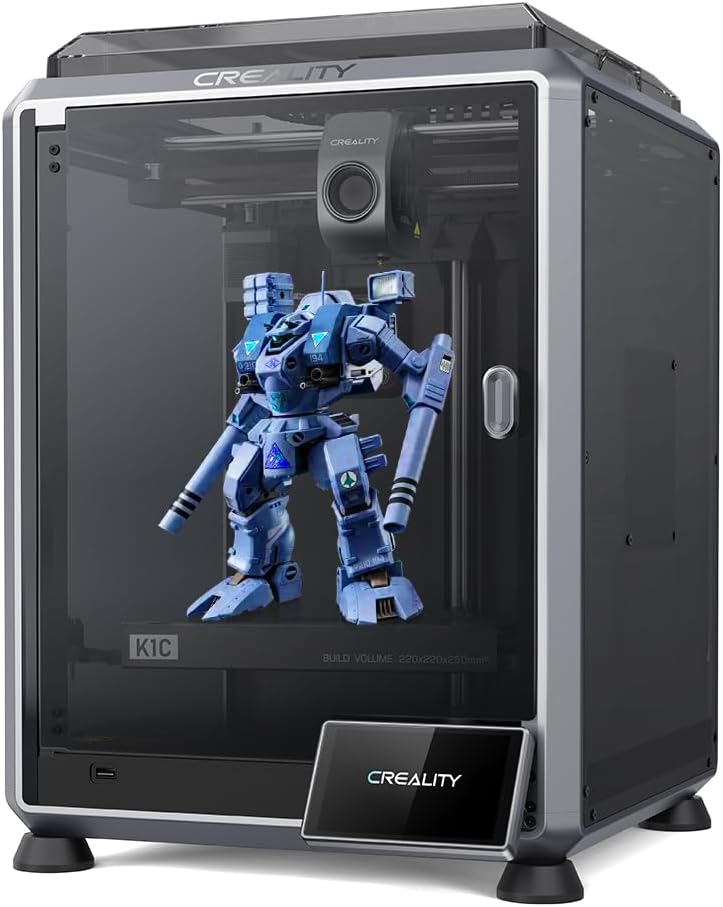
Creality K1C 3D Printer Support Carbon Fiber Filament Auto Leveling
4.3Editor score
Clog-free direct extruder
300 degree nozzle max
Carbon fiber support
This guide compares the top 3D printer for high temperature filaments to help you find the best machine for engineering materials like ABS and PC.
High temperature filaments require printers with robust heating and enclosed chambers. Choosing the right machine ensures consistent results with engineering grade materials that demand higher nozzle and chamber temperatures.
We evaluated ten top models based on their ability to handle advanced filaments. Our analysis focuses on chamber heating, nozzle limits, build stability, and user feedback to identify the most reliable options.
Each pick highlights key strengths and ideal use cases for different users. Remember that product details and pricing can change, so verify current specifications before making your final purchasing decision.
4.3Editor score

4.7Editor score

4.4Editor score
This side-by-side comparison highlights the key technical specifications of each printer to help you evaluate which machine best fits your engineering filament requirements and budget constraints.



This high-speed 3D printer combines precision engineering with active thermal management. Its Adaptive Airflow System maintains a stable fifty degree chamber for reliable prints with engineering materials like ABS and PC.
We may earn a commission when you buy through this link, at no additional cost to you.
The P2S model supports active flow rate compensation and a PMSM Servo Extruder to ensure sharp corners and consistent layer adhesion. It also features quick-swap nozzles and AI failure detection for hassle-free operation.
While it requires the AMS 2 Pro combo for true multi-color printing, the standalone unit still offers robust performance. The carbon filter ensures a clean environment during long print sessions.
This printer is ideal for users seeking professional-grade thermal control without complex setup. Its balance of speed and temperature management makes it a top choice for functional prototyping.
The Adaptive Airflow System automatically balances cooling and heat retention to maintain a consistent fifty degree chamber for engineering materials.
PMSM Servo Extruder and Active Flowrate Compensation ensure flawless corners and smooth layer adhesion across various filament types.
We may earn a commission when you buy through this link, at no additional cost to you.
The Creality K1C is designed for users needing high-temperature and abrasive filament support. It features a durable steel-stripped copper nozzle and titanium alloy heatbreak to prevent heat creep during long prints.
We may earn a commission when you buy through this link, at no additional cost to you.
With a nozzle limit of three hundred degrees and a clog-free direct extruder, this machine handles carbon fiber and high-temperature materials reliably. Its AI camera detects failures like spaghetti or foreign matter in real time.
Auto calibration tools such as input shaping and bed leveling simplify operation. However, users should note the smaller build size compared to larger engineering printers available in the market.
This printer suits hobbyists and small workshops needing robust thermal performance on a budget. Its combination of speed and material compatibility makes it a strong contender for entry-level engineering tasks.
The clog-free direct extruder and titanium alloy heatbreak prevent heat creep and clogs when printing with carbon fiber reinforced materials.
The observant AI camera recognizes failures like spaghetti or debris, allowing real-time monitoring to reduce waste and failed prints.
We may earn a commission when you buy through this link, at no additional cost to you.
This industrial 3D printer features an active heated chamber reaching sixty-five degrees Celsius, ensuring consistent interlayer adhesion for materials like PC and Nylon. Its independent extruder system allows multi-color printing without color mixing.
We may earn a commission when you buy through this link, at no additional cost to you.
The Creator 5 Pro includes HEPA13 air filtration for a cleaner environment, ideal for offices or labs. Its all-metal frame and CoreXY architecture support fast six-hundred millimeter-per-second speeds without vibration.
While powerful, the machine is built for professional settings due to its size and price. The zero-waste nozzle change system significantly reduces material costs during frequent multi-color prints.
This printer is perfect for industrial prototyping where environmental control and reliability are critical. It delivers high throughput and material versatility for demanding engineering applications.
An active heating system maintains a stable sixty-five degree chamber to minimize warping in high-performance materials regardless of room conditions.
The near-zero waste system switches nozzles without purging, saving material and time during multi-color or multi-material printing workflows.
We may earn a commission when you buy through this link, at no additional cost to you.
The P1S is a fully enclosed 3D printer optimized for speed and ease of use. Its closed body improves performance with advanced filaments like ABS and ASA while reducing noise and emissions.
We may earn a commission when you buy through this link, at no additional cost to you.
Users benefit from automatic bed leveling and a build volume suitable for most prototyping needs. While it supports multi-color printing via AMS, this feature requires an additional purchase.
The P1S balances speed with reliability, capable of printing at five hundred millimeters per second. Its user-friendly design makes it accessible even for those new to high-temperature printing.
This model is recommended for users wanting a reliable enclosed experience without complex setup. Its ability to handle PC and PA filaments makes it a versatile choice for engineering tasks.
The fully enclosed body ensures improved print performance for advanced filaments by maintaining stable internal temperatures during operation.
Automatic bed leveling and a ready-to-use setup allow beginners to start printing high-temperature materials within minutes of unboxing.
We may earn a commission when you buy through this link, at no additional cost to you.
The A1 is an open-frame 3D printer designed for ease of use. Its active flow rate compensation and full-auto calibration ensure high-quality prints without manual adjustments.
We may earn a commission when you buy through this link, at no additional cost to you.
While primarily aimed at beginners, it handles PETG and TPU well. Users should note that high-temperature materials like PC may require an optional enclosure kit.
The quiet motor noise canceling and 1-Clip quick swap nozzle simplify maintenance. The touchscreen interface makes navigation intuitive for all skill levels.
This printer suits those entering 3D printing who value speed and calibration accuracy. Its design prioritizes user experience over industrial thermal control.
Full-auto calibration handles Z-offset and bed leveling automatically, eliminating manual adjustments and ensuring consistent first layers every time.
Active flow rate compensation algorithms ensure precise extrusion and smooth prints across a wide range of filament materials.
We may earn a commission when you buy through this link, at no additional cost to you.
The AD5X features IFS technology for independent filament control, allowing up to four colors in one print. Its nozzle reaches three hundred degrees, suitable for ABS, PETG, and high-temperature filaments.
We may earn a commission when you buy through this link, at no additional cost to you.
With a build volume of 220 millimeters, it accommodates larger parts. The fully automatic leveling ensures a perfect bed every time, reducing the need for manual tuning.
While it lacks an active heated chamber, users can add kits for better thermal stability. The CoreXY motion system supports fast six hundred millimeter-per-second speeds with high precision.
This printer is great for creative projects requiring color versatility and speed. It is best suited for those needing high-temperature support without industrial pricing.
Independent Filament System technology allows up to four different colors to be used simultaneously without manual filament swaps.
A maximum nozzle temperature of three hundred degrees Celsius enables reliable printing with ABS, PETG, and other high-temp materials.
We may earn a commission when you buy through this link, at no additional cost to you.
This model offers a spacious build volume of 350 millimeters, ideal for large parts like helmets or functional prototypes. It supports engineering filaments including PA6-CF and PC-CF due to its robust thermal system.
We may earn a commission when you buy through this link, at no additional cost to you.
The Kobra S1 Max features a heated chamber reaching sixty-five degrees and a three hundred-degree nozzle for consistent prints. Its CoreXY structure ensures stability at high speeds up to six hundred millimeters per second.
AI vision monitoring detects failures in real time, reducing waste. While it is a significant investment, the build capacity and thermal control justify the cost for large-scale engineering work.
This printer is ideal for users needing large part production with advanced materials. Its thermal stability and AI features make it a reliable choice for professional prototyping.
The expanded print area of 350 by 350 by 350 millimeters allows creating bigger designs with fewer size limitations for large-scale projects.
A heated chamber reaching sixty-five degrees Celsius and a 300-degree nozzle ensure consistent interlayer adhesion for advanced engineering filaments.
We may earn a commission when you buy through this link, at no additional cost to you.
This AD5X variant emphasizes CoreXY motion for vibration compensation and fast prints. The all-metal hotend reaches three hundred degrees, allowing ABS and nylon printing with optional chamber kits.
We may earn a commission when you buy through this link, at no additional cost to you.
Direct printing via IFS simplifies multi-color workflows by auto-swapping filaments like PLA and TPU. The magnetic PEI plate ensures perfect first-layer adhesion every time.
Remote monitoring via Wi-Fi allows users to check prints from anywhere. While not fully enclosed by default, its thermal design is flexible for upgrades.
It suits users prioritizing speed and color versatility. The combination of CoreXY precision and high nozzle temperature makes it a strong choice for functional prototypes.
Auto-swap IFS system allows seamless transitions between filaments like PLA, PETG, and TPU without manual intervention during prints.
Vibration compensation and linear rails deliver precision even at max speeds, cutting project time by up to seventy percent.
We may earn a commission when you buy through this link, at no additional cost to you.
The Snapmaker U1 features a four-toolhead system with a five-second tool changer for seamless multi-material printing. It can combine rigid and flexible materials in one project without manual swaps.
We may earn a commission when you buy through this link, at no additional cost to you.
Tool changes take five seconds compared to two minutes for traditional systems, reducing waste and time. Its CoreXY motion supports speeds up to five hundred millimeters per second with precision.
Users can switch between water-soluble supports and engineering materials like PC or TPU easily. While expensive, the versatility makes it valuable for complex prototypes.
This printer is ideal for designers needing mixed-material capabilities. Its fast tool changes and automation provide unmatched efficiency for multi-material engineering projects.
Four independent toolheads with automatic tool changing reduce change time to just five seconds while minimizing material waste.
Users can combine rigid and flexible materials, supports, and engineering filaments in one print without manual intervention.
We may earn a commission when you buy through this link, at no additional cost to you.
This industrial 3D printer eliminates waste with four toolheads switching nozzles without flushing filament. The active heated chamber reaches sixty-five degrees for consistent ABS and PC prints.
We may earn a commission when you buy through this link, at no additional cost to you.
HEPA and carbon filtration ensure a safe workspace. The CoreXY structure enables six hundred millimeter-per-second speeds without ghosting, ideal for high-throughput environments.
Users benefit from automated calibration and remote monitoring via Flash Studio. The near-zero waste system cuts operational costs significantly for multi-color printing.
This machine is perfect for labs and industrial prototyping where material costs are critical. Its safety and speed features make it a top choice for professional settings.
Switching nozzles without flushing filament slashes operational overhead and material costs while achieving up to five times faster multi-color speeds.
Dual HEPA and activated carbon filtration trap fumes while the rigid CoreXY structure ensures precision at high speeds.
We may earn a commission when you buy through this link, at no additional cost to you.
Selecting the right printer requires evaluating several technical factors that directly impact print success with engineering filaments.
The nozzle must reach at least two hundred and thirty degrees for ABS and up to three hundred degrees for PC. Higher limits ensure complete melting and smooth extrusion for advanced materials.
Verify the printer supports the required temperature before purchasing to avoid clogs or weak parts during printing.
Active heated chambers maintaining fifty to sixty-five degrees prevent warping in large prints. They ensure consistent interlayer adhesion even when printing materials like Nylon or PC.
If the printer lacks a heated chamber, consider models that support upgrades or use an enclosure for better results.
Larger build volumes allow for bigger parts or multi-part production in one print. Ensure the dimensions fit your project requirements and available workspace.
Consider both X, Y, and Z dimensions to avoid limitations when printing tall or wide components.
Direct extruders provide better grip for abrasive filaments like carbon fiber. Look for hardened nozzles to prevent wear over time when printing such materials.
A clog-free design is essential for maintaining consistent flow during high-temperature operations.
Fully enclosed frames maintain internal temperature and protect prints from drafts. This stability is critical for high-temp filaments to ensure layer adhesion.
Check if the enclosure is sealed and includes air filtration for safer operation in enclosed spaces.
Automatic bed leveling and input shaping simplify setup and improve print quality. These features reduce the risk of failed prints during long engineering jobs.
Prioritize models with full auto calibration for a smoother user experience without manual tuning.
HEPA and carbon filters capture fine particles and odors released during high-temperature printing. This is important for office or home environments.
Verify the printer includes or supports filtration systems to maintain air quality during operation.
Remote monitoring via cameras and mobile apps allows checking prints without visiting the machine. This helps detect failures early and reduce wasted material.
Choose printers with intuitive slicing software and active failure detection for efficient workflows.
Preheat the chamber and nozzle sufficiently before starting a print to ensure consistent temperatures. This step is critical for materials like PC and ABS to prevent warping.
Keep nozzles clean and replace hardened ones regularly to maintain flow. High-temperature printing can wear nozzles faster than standard PLA printing.
Store filaments in dry environments to prevent moisture absorption, which affects print quality. Use dryers or sealed boxes to keep materials in optimal condition.
Filaments like ABS, ASA, PC, Nylon, and carbon fiber blends need temperatures above two hundred and thirty degrees. High-temperature printers ensure these materials melt correctly and adhere well during printing.
Yes, a heated chamber reduces warping and ensures consistent interlayer adhesion. It is especially important for large prints using PC or Nylon.
Standard open-frame printers may struggle with ABS or PC due to warping. Enclosed, high-temperature printers provide better stability and success for these materials.
Clean nozzles regularly and replace hardened steel or titanium ones when flow drops. Regular maintenance prevents clogs during high-temperature printing.
Air filtration is recommended to capture fumes and particles released during high-temperature prints. It ensures a safer environment for users and nearby spaces.
Polycarbonate (PC) and Nylon offer high strength and temperature resistance. They are ideal for functional parts exposed to heat or stress.
The Creality K1C, Bambu Lab P2S Combo, and FLASHFORGE Creator 5 Pro stand out for balancing performance and thermal control across different budgets.
Prioritize nozzle temperature, chamber heating, and build stability to ensure successful prints with engineering materials. These factors directly impact the reliability and quality of your finished parts.
Always check current product details and pricing before purchasing as specifications and costs may change over time.