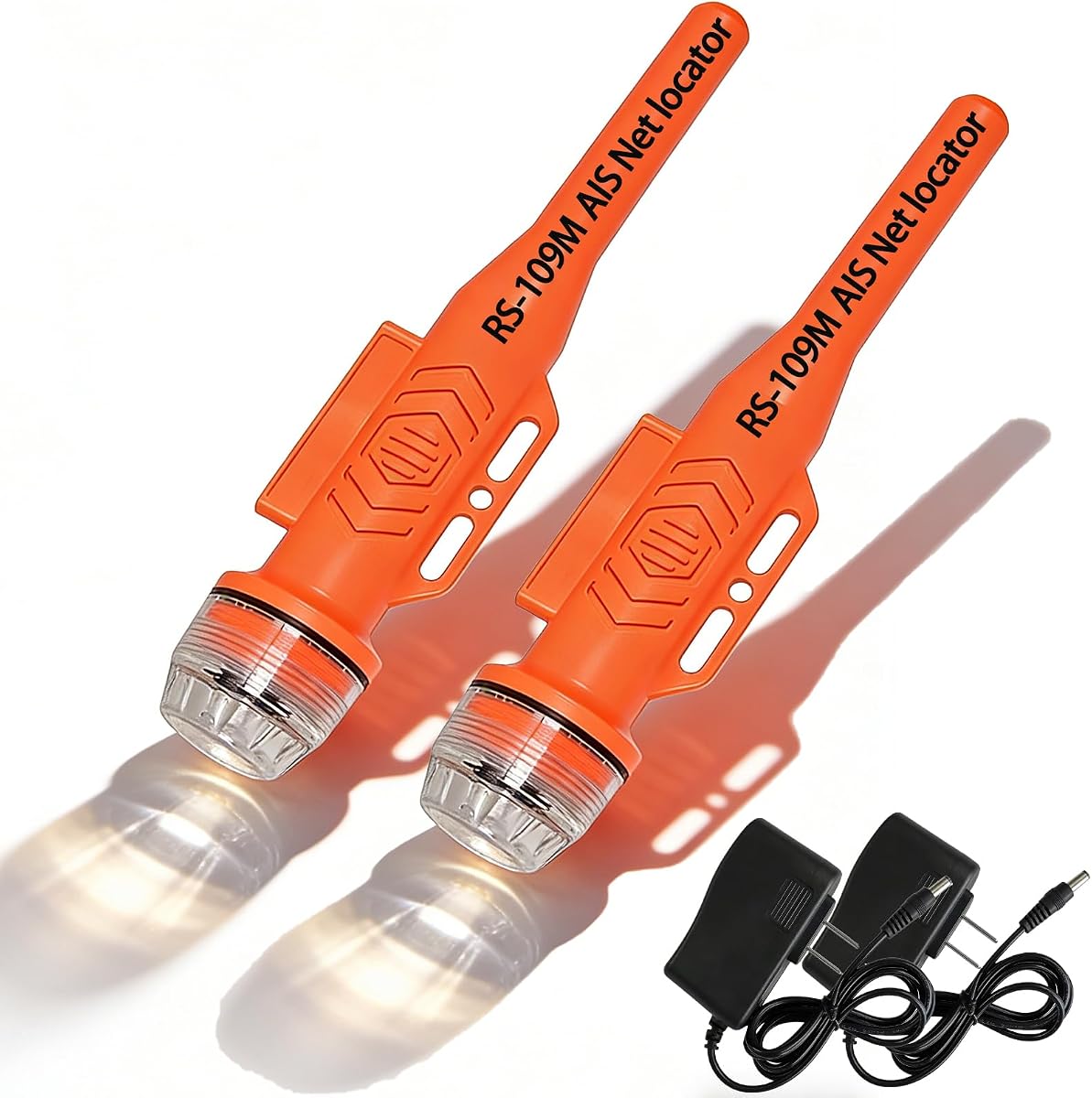
RS-109M Marine Net Locator
4.5Editor score
IPX7 Waterproof Design
10 Nautical Mile Range
High Capacity Battery
Ais Transponders are essential tools for modern maritime navigation, offering real-time vessel tracking and collision avoidance capabilities. Whether you navigate coastal waters or open oceans, having reliable identification systems ensures you stay visible to other ships and authorities.
We evaluated ten top-rated Ais Transponders based on build quality, signal range, display clarity, and integration with existing marine electronics. Our analysis focuses on how each model enhances situational awareness while meeting international safety standards for recreational and commercial vessels.
Each selection highlights unique strengths such as budget-friendly options, premium Class A systems, or personal locator beacons. Prices fluctuate frequently due to market demand and seasonal sales, so verify current listings before making your final purchase decision online.
4.5Editor score

4.8Editor score
4.9Editor score
As an Amazon Associate we earn from qualifying purchases.
The following table provides a side-by-side comparison of all ten selected Ais Transponders, highlighting key specifications and capabilities to help you identify the right fit for your vessel.




The Icom MA-510TR stands out as a top choice for boaters needing reliable AIS functionality. It features a clear 4.3 inch display that simplifies navigation and vessel tracking in various lighting conditions.
We may earn a commission when you buy through this link, at no additional cost to you.
This unit integrates GPS and offers DSC calling capabilities when paired with compatible VHF radios. The multilingual interface supports five languages, making it accessible for international users cruising different regions.
While it is a Class B system, it handles most recreational needs well. The silent mode allows discreet operations when required, and the anchor watch alarm adds an extra layer of security at moorings.
Ideal for sailors and cruisers prioritizing user-friendly interfaces and core safety features. Its NMEA compatibility ensures it works smoothly with existing chartplotters and navigation systems.
The collision alarm feature alerts you to nearby vessels on potential paths, giving you more time to react safely during busy traffic periods.
Configurable settings allow you to input MMSI and ship details, ensuring your vessel is correctly identified to other ships and coast guards.
We may earn a commission when you buy through this link, at no additional cost to you.
The EM-TRAK NF-189 is an affordable option for those seeking basic AIS reception and transmission. It supports both 12 and 24 volt systems, fitting a wide range of boat electrical setups easily.
We may earn a commission when you buy through this link, at no additional cost to you.
Its compact design allows installation in tight spaces on smaller vessels. While it lacks some advanced features found in premium models, it delivers reliable performance for essential visibility.
The multicolored standard casing blends well with typical marine equipment. However, users should note it requires external GPS input for full functionality.
Best for budget-conscious buyers needing fundamental AIS capabilities. It provides necessary identification to prevent collisions without breaking the bank.
This unit offers a low barrier to entry for AIS technology, allowing smaller boats to participate in the identification network efficiently.
Supporting 12 and 24 volt systems means it fits both small recreational craft and larger commercial vessels without additional converters.
We may earn a commission when you buy through this link, at no additional cost to you.
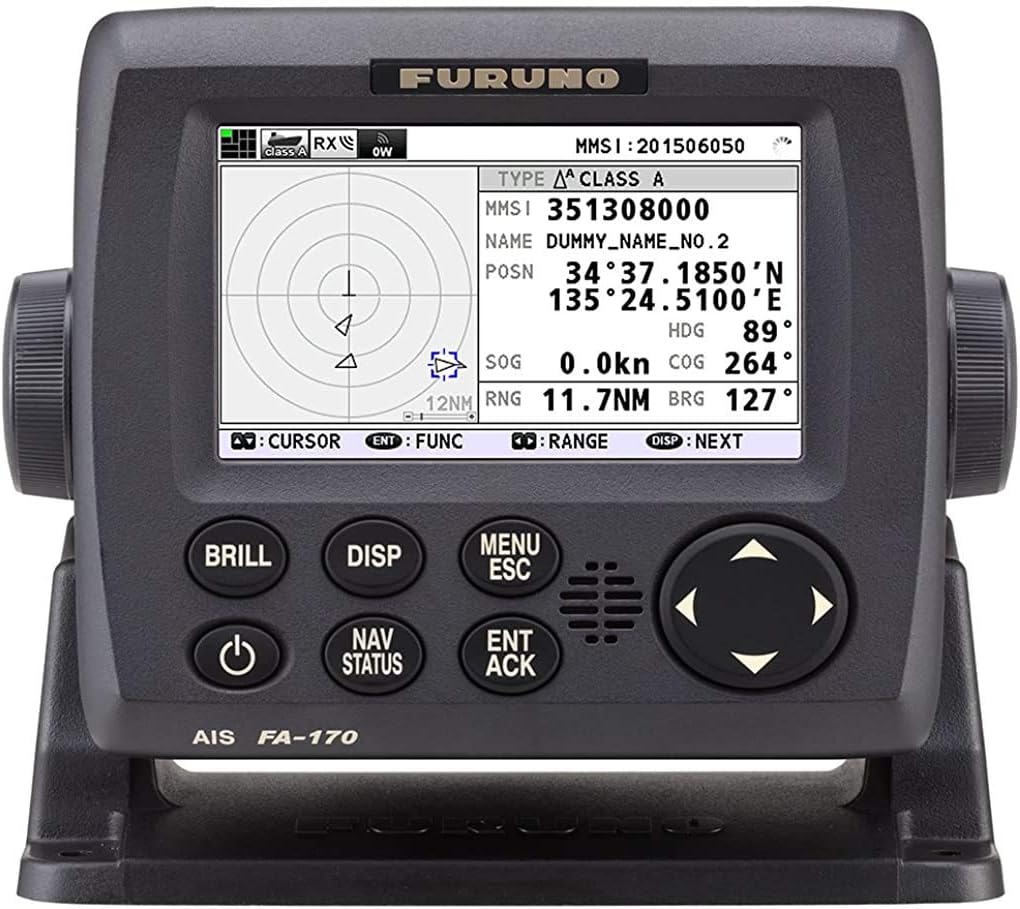
The Furuno FA170 is a Class A transponder designed for serious maritime operations. Its ability to store up to 2,048 targets ensures comprehensive situational awareness even in crowded waterways.
We may earn a commission when you buy through this link, at no additional cost to you.
When dangerous targets are detected, it provides a dedicated list to alert the crew quickly. This feature is vital for large vessels navigating busy commercial shipping lanes.
Multiple input and output ports facilitate integration with complex radar and navigation networks. A LAN port and alarm output enhance its utility for automated safety systems.
Perfect for commercial ships or large yachts requiring maximum compliance and safety. It offers unparalleled performance for those who demand the highest standard in identification.
The system handles hundreds of targets simultaneously, allowing operators to monitor every vessel nearby without clutter or data loss.
Automatic detection of dangerous targets ensures critical threats are highlighted immediately, reducing human error during high-pressure maneuvers.
We may earn a commission when you buy through this link, at no additional cost to you.
The RS-109M is designed primarily for tracking net buoys and fishing gear. Its IPX7 waterproof rating ensures it survives submerged conditions without damage, making it durable for marine environments.
We may earn a commission when you buy through this link, at no additional cost to you.
Real-time battery level transmission keeps you informed of power status. With a 3000mAh lithium battery, it supports continuous transmission for up to two weeks reducing maintenance needs.
GPS positioning provides accurate location updates for retrieving gear in open waters. The 10 nautical mile range ensures coverage across coastal and offshore zones.
Ideal for commercial fishers needing to monitor nets. It combines reliable tracking with long battery life to minimize downtime during operations.
Accurate GPS data helps you locate gear quickly, saving valuable time that would otherwise be spent searching for lost buoys.
Extended battery life reduces the frequency of battery replacements, ensuring your tracking remains active throughout long fishing seasons.
We may earn a commission when you buy through this link, at no additional cost to you.
This bundle combines VHF radio functionality with AIS reception in a single Raymarine package. It simplifies installation by providing necessary accessories for a fixed mount setup.
We may earn a commission when you buy through this link, at no additional cost to you.
Designed specifically for Raymarine multifunction displays, it ensures seamless data integration on your charts. The Ray90 VHF component handles communication while the AIS provides traffic awareness.
While limited to Raymarine ecosystems, it offers a robust solution for existing users. The fixed mount design provides stability and ease of use in rough seas.
Best for boaters already invested in Raymarine navigation systems. It ensures your communication and safety tools work together perfectly.
The bundle allows direct data flow to your navigation screen, simplifying your workflow by combining radio and traffic info in one place.
Included accessories reduce the need for extra purchases, making the initial installation process smoother and faster.
We may earn a commission when you buy through this link, at no additional cost to you.
The ACR RESQLINK is a personal locator beacon designed to alert nearby vessels and satellites in emergencies. Its small size allows attachment to life jackets for immediate activation.
We may earn a commission when you buy through this link, at no additional cost to you.
Return Link Service confirms that rescue teams have received your signal. This peace of mind is critical during solitary voyages or offshore sailing.
Built-in GPS and NFC technology allow battery status checks via mobile apps. The infrared strobe and strobe lights enhance visibility at night during rescue operations.
Essential for individual safety on any vessel. It acts as a critical backup when other systems fail, ensuring you can summon help quickly.
Operating on 406 MHz COSPAS-SARSAT frequencies ensures your distress signal is detected globally regardless of location.
Designed to attach simply to inflatable PFDs, it ensures you can activate it quickly even in stressful emergency situations.
We may earn a commission when you buy through this link, at no additional cost to you.
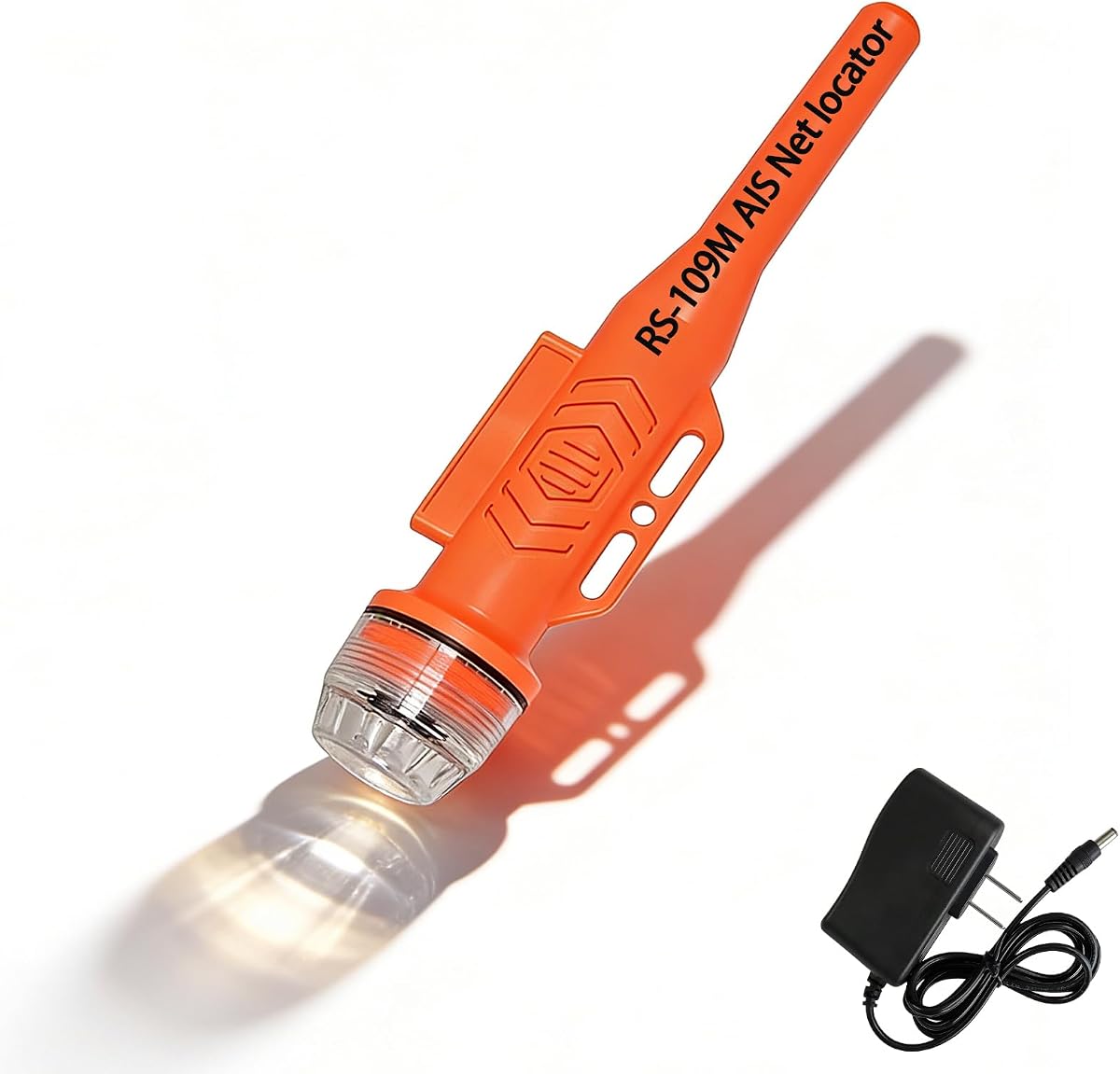
This single unit mirrors the capabilities of the two-pack but offers flexibility for tracking one item. It maintains the IPX7 waterproof rating ensuring durability in harsh marine conditions.
We may earn a commission when you buy through this link, at no additional cost to you.
Data sync transmission keeps the onboard receiver updated with buoy status and battery levels. This helps maintain equipment reliability without constant physical checks.
GPS positioning delivers precise updates for navigation and retrieval. The 10-mile range is sufficient for most coastal fishing operations or buoys.
Best for small operations needing a simple tracking solution. It provides essential data to prevent gear loss and maintain operational efficiency.
Real-time battery monitoring reduces guesswork, allowing you to replace batteries only when necessary rather than on a fixed schedule.
The high sensitivity GPS module ensures quick and precise updates even in challenging signal conditions or heavy weather.
We may earn a commission when you buy through this link, at no additional cost to you.
The Icom M94D combines a handheld VHF transceiver with an integrated AIS receiver. This portability is ideal for crew members moving around the boat or dinghies.
We may earn a commission when you buy through this link, at no additional cost to you.
AIS target calls make setting up individual calls fast and easy. The 1500 mW audio output ensures you can hear calls clearly in noisy engine rooms.
Float n Flash functionality activates if dropped overboard, sending a distress signal automatically. The 2400 mAh battery provides up to 10 hours of operation.
Perfect for safety-conscious boaters needing a backup radio with traffic awareness. It adds significant value to standard handhelds with its built-in safety features.
The MOB distress signal feature ensures you can summon help immediately if someone falls overboard, improving rescue response times.
Class-leading audio output ensures messages are understood clearly even in high wind or engine noise conditions.
We may earn a commission when you buy through this link, at no additional cost to you.
The Icom M510 EVO offers a modern fixed mount VHF with built-in AIS and NMEA 2000 connectivity. It simplifies system wiring by integrating communication and navigation data.
We may earn a commission when you buy through this link, at no additional cost to you.
Its design supports seamless data sharing with chartplotters and displays. This ensures you can view AIS targets directly on your navigation screen without extra hardware.
The built-in AIS provides real-time traffic information. Combined with NMEA 2000, it creates a robust network for modern boats.
Ideal for new installations or upgrades. It provides a high-quality communication solution that integrates well with complex navigation setups.
By using NMEA 2000, you reduce cable clutter and make it easier to add new devices to your network later.
Built-in AIS ensures you are aware of nearby traffic while communicating, allowing for better situational management.
We may earn a commission when you buy through this link, at no additional cost to you.
The Raymarine AIS700 is a Class B transceiver designed for use with Raymarine multifunction displays. It supports full transmit and receive capabilities for enhanced awareness.
We may earn a commission when you buy through this link, at no additional cost to you.
SO-TDMA networking provides longer range and faster performance. Built-in antenna splitter simplifies installation with existing VHF antennas saving extra hardware.
Compatibility with SeaTalkng and NMEA2000 ensures it fits into established networks. PC setup and diagnostics tools help maintain system health.
Best for Raymarine users needing a reliable upgrade. It delivers strong performance for vessels within that ecosystem.
SO-TDMA networking minimizes signal loss, ensuring your AIS data remains consistent even in areas with heavy traffic.
The built-in antenna splitter saves time and money, allowing you to share your VHF antenna without needing an external component.
We may earn a commission when you buy through this link, at no additional cost to you.
Selecting the right Ais Transponder requires understanding the differences between Class A and Class B systems, connectivity options, and intended use cases.
Class A systems transmit more frequently and are required for commercial vessels over 300 tons. Class B systems are cost-effective for recreational boats and offer sufficient visibility for most leisure operations.
Choose Class A for commercial compliance or Class B for personal safety and visibility.
Modern units integrate with NMEA 0183 or NMEA 2000 networks. Ensure your chartplotter supports the chosen protocol to view AIS data on your navigation screen.
NMEA 2000 offers simplified wiring and faster data transfer for advanced setups.
Built-in GPS units are easier to install but may be slightly less accurate than external antennas. External antennas improve signal quality in areas with metal structures.
Select external GPS for best accuracy or internal for easy setup.
Units with dedicated displays allow quick access to traffic data without needing a separate chartplotter. Smaller units save space but rely on external screens.
Prioritize units with clear screens if you prefer local data access.
Standard AIS VHF signals typically reach 5 to 10 nautical miles depending on antenna height. Buoy trackers may have extended ranges to ensure gear visibility.
Consider antenna height to maximize range on your vessel.
Marine units must resist salt spray, humidity, and vibration. Look for IPX7 or higher waterproof ratings if the device will be exposed to elements.
Choose waterproof models for exposed mounting locations.
Prices vary significantly between personal beacons, Class B receivers, and Class A transponders. Determine your needs to avoid overpaying for commercial features.
Match the budget to your actual safety requirements.
Established brands like Icom and Furuno offer reliable support and warranty coverage. Check user reviews for long-term performance feedback.
Buy from reputable brands for better after-sales service.
Always register your MMSI number correctly when installing the unit. An incorrect ID may cause confusion with other vessels and hinder effective communication.
Regularly update your firmware through the manufacturer's software to ensure the system runs smoothly and supports new features or fixes.
Clean the unit's exterior regularly to prevent salt buildup which can degrade performance. Store it in a dry place when not in use to extend its lifespan.
Class A units transmit more frequently and are mandatory for large commercial ships. Class B units are designed for recreational use and transmit data at a lower frequency which is sufficient for personal navigation.
Many modern units include built-in GPS which is convenient for installation. However, external antennas can provide better accuracy especially in areas with high metal interference.
Yes, many standalone AIS units can connect to a chartplotter or display. Some bundles include both VHF and AIS to ensure full functionality.
You can verify your MMSI through the device's settings menu or by checking it with nearby vessels. Incorrect settings may prevent your boat from being identified properly.
Most Class B systems do not require a subscription as they rely on public VHF frequencies. Some satellite-linked devices may require plans for global coverage.
It is recommended to test your system at least once a year or before long trips. Ensure that the connection to your display is active and data is updating.
Yes, AIS systems work in both salt and fresh water. They help identify other vessels and improve safety regardless of the water type.
Personal beacons have long battery lives often rated for 5 to 10 years. Once it dies, you must replace the battery unit to ensure it works in emergencies.
The ten models reviewed offer diverse solutions ranging from budget-friendly trackers to professional grade transponders. Each one meets specific needs whether for personal safety or commercial navigation.
Prioritize features like GPS integration and display compatibility based on your boat's existing setup. Ensure the unit supports your required connectivity protocol to avoid installation issues.
Always verify current pricing and availability before purchasing to get the best deal. Safety is paramount in maritime navigation so choose a unit that fits your budget.