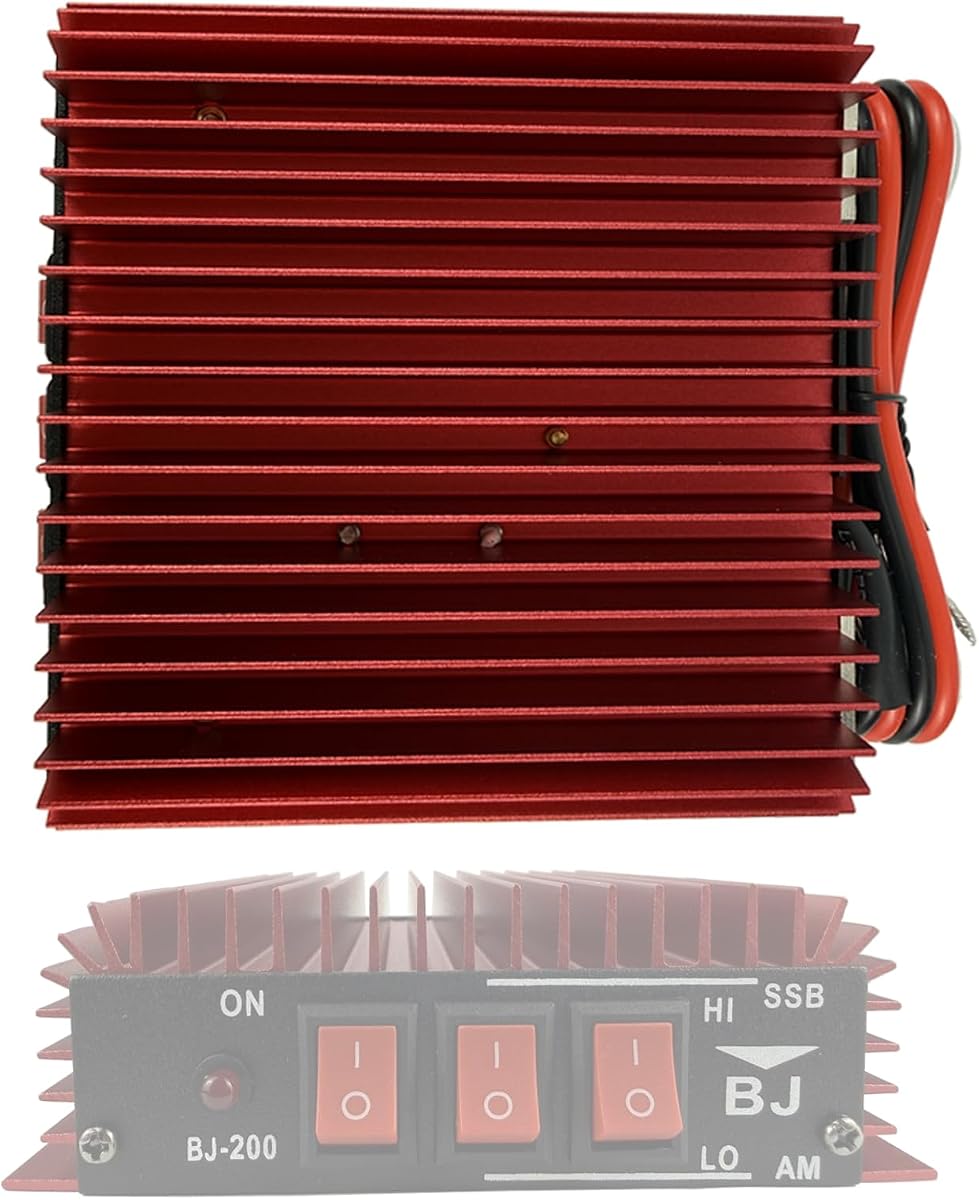
BJ-200 Linear Power AMP
5.0Editor score
150W SSB output
Compact aluminum design
Polarity reversal protection
This guide compares the top linear amplifiers for ham radio to help you choose the best HF amplifier for your station and communication needs.
Choosing the right linear amplifier for your ham radio station can significantly improve your signal strength and reach. These devices boost your transmitter output while maintaining signal purity across various HF bands for clear communication.
We have evaluated ten top-rated linear amplifiers based on performance, reliability, features, and user feedback. Our comparison covers a range of options from compact modules to powerful bench units suitable for different operating styles.
Each selection highlights key specifications and real-world capabilities to help you make an informed decision. Please note that product availability and pricing may change over time, so verify details before purchasing your next amplifier.
5.0Editor score

4.2Editor score

3.9Editor score
The following table provides a side-by-side overview of key specifications for each amplifier to help you quickly identify the model that fits your technical requirements and budget constraints.


The Xiegu GPA100 stands out as a high-performance linear amplifier designed for HF radio transceivers. With a solid-state linear design, it delivers clean and stable RF output up to 100W on HF bands and 80W on 6m. This model ensures low distortion and high efficiency, making it ideal for operators who value signal clarity across SSB, AM, FM, CW, and digital modes.
We may earn a commission when you buy through this link, at no additional cost to you.
One of its most appealing features is the flexible band switching capability. Operators can select from seven bands using manual buttons with indicator lights or enable auto mode for seamless tracking. Additionally, the built-in Bluetooth allows wireless band control when paired with compatible transceivers like the IC-705, eliminating the need for extra cables during operation.
While the GPA100 offers robust protection against high SWR, overheating, and overcurrent, its power output is capped at 100W. This may not suit operators seeking kilowatt-level amplification. However, for QRP enthusiasts looking to upgrade to 100W without complex setups, the trade-off is acceptable given the unit's reliability and smart features.
This amplifier is best suited for operators who prioritize convenience and signal quality over raw power. Whether you are running a G90 or IC-705, the GPA100 provides a stable, efficient, and user-friendly amplification solution that integrates well into modern HF stations.
The built-in Bluetooth feature allows operators to switch bands automatically when connected to compatible radios, reducing cable clutter and streamlining setup.
Intelligent control circuits detect and protect against high SWR, overheating, and overpower, ensuring stable performance and longer lifespan even during extended sessions.
We may earn a commission when you buy through this link, at no additional cost to you.
The BJ-300 Plus is a broadband linear amplifier designed for CB and ham radio applications. It supports AM, FM, SSB, and CW modes, delivering up to 150W SSB output. This makes it a suitable choice for operators looking to extend communication range for reliable long-distance operation on HF bands.
We may earn a commission when you buy through this link, at no additional cost to you.
Thermal management is handled by a high-efficiency cooling fan and a large aluminum heat sink, ensuring stable operation during extended use. Safety features include electronic polarity reversal protection and dual 15A fuses to safeguard against incorrect connections and electrical surges. The design features simple controls and standard PL-259 connectors for quick setup.
Despite its power, the BJ-300 Plus has received mixed user feedback, which may indicate quality control or reliability concerns. While it offers solid performance on paper, users should be aware that it might not match the consistency of higher-rated models in long-term usage scenarios.
This unit is best for budget-conscious operators who need higher output power and are comfortable managing basic controls. It provides a straightforward amplification solution for HF transceivers requiring 3-5W input but may require careful monitoring to ensure optimal performance.
A dedicated radiator fan and large heat sink prevent overheating, allowing for stable performance even during long transmission sessions.
Electronic polarity reversal protection and fuses help prevent damage from incorrect power connections and electrical surges.
We may earn a commission when you buy through this link, at no additional cost to you.
This variant of the BJ-300 Plus offers similar performance characteristics with a focus on compatibility and ease of use. It supports AM, FM, SSB, and CW modulation modes with up to 150W SSB output. The unit operates on 13.8V input and is designed to work with HF transceivers requiring low power input.
We may earn a commission when you buy through this link, at no additional cost to you.
Reliable thermal management is ensured by a built-in cooling fan and aluminum heat sink, which helps maintain stable operation during extended use. Safety is addressed through electronic polarity reversal protection and dual 15A fuses. The design includes simple controls and standard PL-259 connectors for straightforward installation.
User ratings suggest that while the amplifier functions as described, there may be inconsistencies in build quality or long-term reliability. Operators should weigh the high output capabilities against the potential for variability in performance when considering this model.
The BJ-300 Plus v2 is suitable for operators who need a compact, high-power amplifier and are willing to manage basic controls. It is a practical choice for HF applications where simplicity and range extension are prioritized over advanced features.
Standard connectors and a straightforward layout make installation quick and easy for both new and experienced users.
Polarity reversal protection and fuses safeguard the amplifier from incorrect connections and electrical surges.
We may earn a commission when you buy through this link, at no additional cost to you.
The BJ-300 is a broadband linear amplifier suitable for HF transceiver applications. It supports AM, FM, SSB, and CW modes, delivering up to 150W SSB output. The unit is designed to work with transceivers requiring 3-5W input power for AM/FM and 2-10W for SSB.
We may earn a commission when you buy through this link, at no additional cost to you.
Dual power control allows operators to adjust output strength based on operating needs via HI/LO switches. Built-in electronic switches and polarity inversion protection help safeguard the amplifier from incorrect power connections. The compact aluminum alloy heat sink construction provides efficient heat dissipation for stable operation.
While the amplifier offers robust performance features, there is no user rating data available to confirm long-term reliability. Operators should consider this when evaluating the unit for critical communications. The design is practical and durable, making it a decent option for budget-conscious users.
This model is best for operators who need a straightforward, high-output amplifier without advanced features. It is suitable for HF band applications where simplicity and reliable power output are key requirements.
HI/LO power selection switches allow users to adjust output strength to match different operating needs and conditions.
Compact aluminum alloy heat sink design ensures efficient heat dissipation and stable performance during extended use.
We may earn a commission when you buy through this link, at no additional cost to you.
The BJ-200 is a highly-rated linear power amplifier designed for CB radio use across 3-30MHz. It supports AM, FM, and SSB modes, delivering up to 150W SSB output from a 3-5W input. This makes it an excellent budget option for operators looking to extend their range without overspending.
We may earn a commission when you buy through this link, at no additional cost to you.
Operates on 13.8V DC power with 8-11A current draw. Polarity reversal protection prevents damage from incorrect power connections. User-friendly controls include an ON/OFF switch, HI/LO power adjustment, and mode selectors. A red aluminum alloy heat sink ensures optimal thermal management.
While it excels in basic performance, it lacks automatic features like band switching or tuner integration. Users must manually select modes and adjust power. Despite this, its strong user feedback and reliability make it a trustworthy choice for simple HF setups.
This amplifier is best for budget-conscious operators who need dependable amplification for voice and CW modes. It offers a compact, durable build suitable for vehicle or base station installations and remains a top contender in the value category.
Clear switches and LED indicators allow easy operation and power status confirmation for both novice and experienced users.
Built-in polarity reversal protection ensures the amplifier remains safe from damage due to incorrect power connections.
We may earn a commission when you buy through this link, at no additional cost to you.
The Xiegu XPA125B combines a power amplifier and automatic antenna tuner in a single compact unit. It delivers up to 125W output and handles 14-500 ohm loads across HF and 6-meter bands. This integration simplifies station setup for QRP radios or SDR transceivers needing higher power.
We may earn a commission when you buy through this link, at no additional cost to you.
Safety features include intelligent protection circuits that detect abnormal conditions like high SWR or excessive drive power. A 2.7-inch backlit LCD displays input/output power, voltage, and temperature. The design is smaller than previous versions and offers a user-friendly interface for modern operation.
While the built-in tuner adds significant convenience, users may find the rating mixed compared to standalone amplifiers. The premium price may not suit all budgets. However, the integration and protection features make it a valuable investment for streamlined stations.
This unit is best for operators seeking a single device for both amplification and tuning. It is ideal for QRP stations looking to maximize performance without external tuner complexity.
The built-in automatic antenna tuner handles a wide impedance range and can operate independently or with the amplifier.
A large backlit LCD shows critical metrics like SWR, temperature, and power status for easy monitoring during operation.
We may earn a commission when you buy through this link, at no additional cost to you.
The LICAEVEY 30W amplifier board is designed for CW and SSB modes across the full shortwave spectrum. It provides a finished board solution that is easy to integrate with QRP transceivers. This module is ideal for contest operators and DXers who prioritize signal purity over raw power.
We may earn a commission when you buy through this link, at no additional cost to you.
Engineered for high-frequency operation from 3MHz to 30MHz, it uses broadband circuitry to deliver consistent gain without manual tuning. Thermal management includes an integrated heat sink and low-loss PCB material, ensuring stability during extended transmit cycles. The design is robust against overcurrent and voltage fluctuations.
While the 30W output is lower than other options, it is sufficient for portable and field day setups. Users should note that assembly or mounting may be required. It is a practical upgrade for those looking to boost signal clarity on specific bands.
This board is best for operators who need a versatile, high-efficiency module for home or portable setups. It suits hobbyists who enjoy customizing their station with compact and efficient hardware.
Linear design ensures high efficiency transistors and wide bandwidth for clear voice and precise Morse code transmission.
Clearly marked input/output ports and power connections allow straightforward installation into existing transceiver systems.
We may earn a commission when you buy through this link, at no additional cost to you.
This variant of the BJ-200 is designed for automotive or stationary power supplies with a 12-14V input range. It features a simple three-wire connection using SO-239 connectors, which ensures stable operation during engine start and is suitable for most CB radios and antenna systems.
We may earn a commission when you buy through this link, at no additional cost to you.
The compact design makes it easy to install in mobile setups. While detailed specs are limited, the unit focuses on basic connectivity and voltage compatibility. It is a practical choice for mobile operators seeking a straightforward amplification solution.
Due to limited available information, users should ensure compatibility with their specific transceiver requirements. It serves well for CB use cases where simplicity and power stability are the main priorities.
This amplifier is best for mobile operators who need a simple, reliable boost for their CB setup. It ensures stable performance in environments with fluctuating power supplies.
The wide DC input range ensures stable operation even during engine starts in automotive environments.
Standard SO-239 connectors simplify installation for most CB radios and antenna systems.
We may earn a commission when you buy through this link, at no additional cost to you.
This broadband low noise amplifier covers 0.1MHz to 2000MHz, making it versatile for CB, shortwave, and FM applications. It offers 32dB gain and a low noise figure, significantly improving weak signal reception. Ideal for RF receiving front-end applications, it helps increase communication distance and improve quality.
We may earn a commission when you buy through this link, at no additional cost to you.
Operates on 9-12V DC with only 27mA current draw, making it battery friendly for portable use. The stable performance includes consistent 50 ohm impedance. It is great for DIY projects, amateur radio, and shortwave listening where signal clarity is key.
Unlike standard linear amplifiers, this unit is designed primarily for reception and boosting weak signals rather than high-power transmission. Operators should use it as a preamp before transceivers to enhance sensitivity without adding noise.
This LNA is best for operators dealing with weak signals or looking to improve reception quality. It is a powerful tool for field use, SDR, and remote control receiver applications.
With 32dB gain and a low noise figure, this LNA significantly improves weak signal reception across a wide frequency range.
Supports 9V to 12V power supplies with minimal current draw, making it suitable for battery-powered field operations.
We may earn a commission when you buy through this link, at no additional cost to you.
The Xiegu XPA125B PA and ATU is designed specifically for Xiegu transceivers, delivering 100W output across HF frequencies. It features advanced automatic tuning functionality that simplifies the process, allowing users to focus on communication. The consistent output maintains maximum power with minimal manual adjustments.
We may earn a commission when you buy through this link, at no additional cost to you.
Constructed from high-quality materials, it ensures durability and reliability for long-term use. The unit is optimized for G90, G106, and other Xiegu models. Professional after-sales service is available to ensure a perfect user experience.
While highly compatible with Xiegu hosts, operators with other transceiver brands may find the integration limits useful. The automatic tuning is a significant advantage for those prioritizing operational efficiency over manual control.
This amplifier is best for operators already invested in the Xiegu ecosystem. It offers a premium, integrated solution that enhances operational efficiency and communication capabilities.
Specifically designed for compatibility with G90, G106, and other Xiegu models for seamless operation.
Ham Club Only provides professional after-sales service to ensure a perfect user experience and reliability.
We may earn a commission when you buy through this link, at no additional cost to you.
Selecting the right linear amplifier depends on your specific station needs, power requirements, and operating style.
Output power determines how much your signal can be boosted. Common options range from 30W modules to 150W+ units. Ensure the amplifier matches the output needs of your station and transceiver driver capabilities.
Choose higher wattage if you need to extend range significantly, but note that more power requires more careful management and potentially larger cooling systems.
Linear amplifiers must support the modulation modes you use, such as SSB, AM, FM, and CW. Check if the unit handles all HF bands or specific ranges to avoid restrictions during operation.
Verify mode support in the product data to ensure your amplifier can handle both voice and digital transmission types without distortion.
Efficient heat dissipation is vital for stable performance during extended transmissions. Look for units with fans, heat sinks, or smart cooling to prevent overheating and maintain efficiency.
Active cooling with fans is often preferred for high-power units to ensure stability during long operating sessions.
Protection against high SWR, overcurrent, overheating, and polarity reversal is essential for safety. Intelligent circuits that bypass or alarm under abnormal conditions protect both the amplifier and transceiver.
Prioritize models with automatic shutdown or bypass modes to avoid damage during transmission errors.
User-friendly controls such as automatic band switching, Bluetooth, or simple switches improve ease of use. Evaluate whether you need manual adjustments or smart integration with your transceiver.
Wireless options like Bluetooth can reduce cable clutter and streamline band switching for frequent operators.
If you operate from vehicles or portable stations, consider compact and rugged designs. Aluminum heat sinks and low weight make a unit suitable for mobile environments.
Choose a build that matches your installation space and weight constraints without sacrificing durability.
Some amplifiers are optimized for specific transceiver brands like Xiegu or IC-705. Ensure compatibility with your radio to take advantage of automatic features like ALC or band tracking.
Check compatibility lists to ensure seamless integration and avoid manual tuning requirements.
Budget amplifiers offer essential power with fewer features, while premium models include tuners and digital displays. Weigh features against your needs to find the best long-term value.
Prioritize reliability and features you will actually use over unnecessary advanced capabilities.
Ensure all connections are correct and polarity matches the amplifier input. Use high-quality cables and connectors to minimize loss and ensure stable signal transfer.
Monitor temperature during extended operation. If the unit includes a fan, ensure it is functioning and vents are unobstructed to avoid overheating.
Perform regular checks on protection features. If alarms trigger, investigate causes like high SWR or mismatched antennas before resuming transmission.
A linear amplifier boosts the RF output power from your transceiver to increase signal strength and reach. It maintains signal linearity and purity to ensure clear voice and data transmission across HF bands.
No, some amplifiers are optimized for specific transceiver brands and may require specific drivers or interfaces. Always check compatibility lists before purchasing to ensure seamless integration.
Look for protection against high SWR, overcurrent, overheating, and polarity reversal. Intelligent circuits that bypass or alarm under abnormal conditions help prevent damage to equipment.
Cooling is vital for stable performance during extended transmissions. Units with fans and heat sinks maintain efficiency and longevity, preventing overheating issues.
Many models are designed for mobile use with compact builds and automotive voltage compatibility. Ensure the unit is rugged enough for vibration and has appropriate connectors.
Most linear amplifiers require low input power from your transceiver, such as 3-5W or 2-10W. Check the product specifications to ensure your radio meets the input requirements.
The Xiegu GPA100, BJ-200, and Xiegu XPA125B stand out as top choices offering different balances of power, features, and value. Each model serves specific needs from high output to premium integration.
Prioritize safety features and compatibility with your transceiver when selecting. A good amplifier should enhance your station without complicating operation or risking equipment.
Product availability and pricing change frequently. Always verify current specs and reviews before purchasing to ensure the best decision for your ham radio setup.