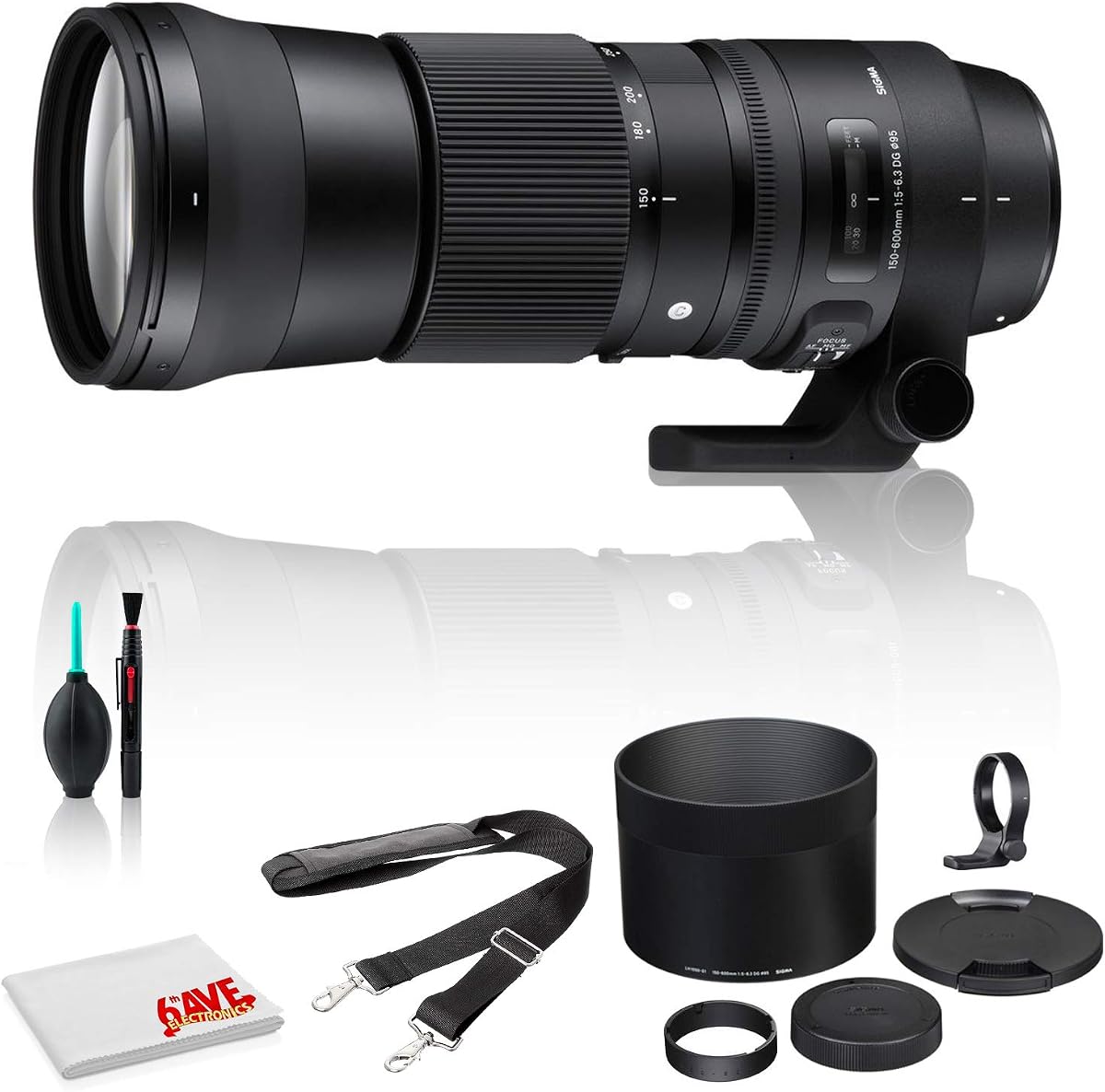
Sigma 150-600mm f/5-6.3 DG OS HSM Contemporary Lens
4.5Editor score
One FLD and three SLD elements
Optical stabilizer with accelerometer
Hyper Sonic Motor AF
This guide compares the top ten camera lenses for long distance wildlife photography, evaluating zoom reach, image stabilization, autofocus speed, and build
Capturing wildlife from a safe distance requires exceptional optics that deliver sharp detail and reliable performance. A dedicated telephoto lens allows photographers to frame distant animals without disturbing their natural behavior. Quality glass ensures crisp images even in challenging light conditions found in forests or open plains.
We evaluated ten top rated lenses based on zoom range, stabilization technology, autofocus precision, and optical construction. Each option serves different needs, from budget friendly manuals to professional super-telephoto zooms. Our analysis highlights key strengths and limitations to help you find the best match for your camera system and shooting style.
Each review details specific performance traits, compatibility notes, and practical usage scenarios for real world fieldwork. While pricing fluctuates regularly, the technical merits remain consistent across these models. Always verify current availability and bundle inclusions before purchasing to ensure you get the complete package you expect.
4.5Editor score
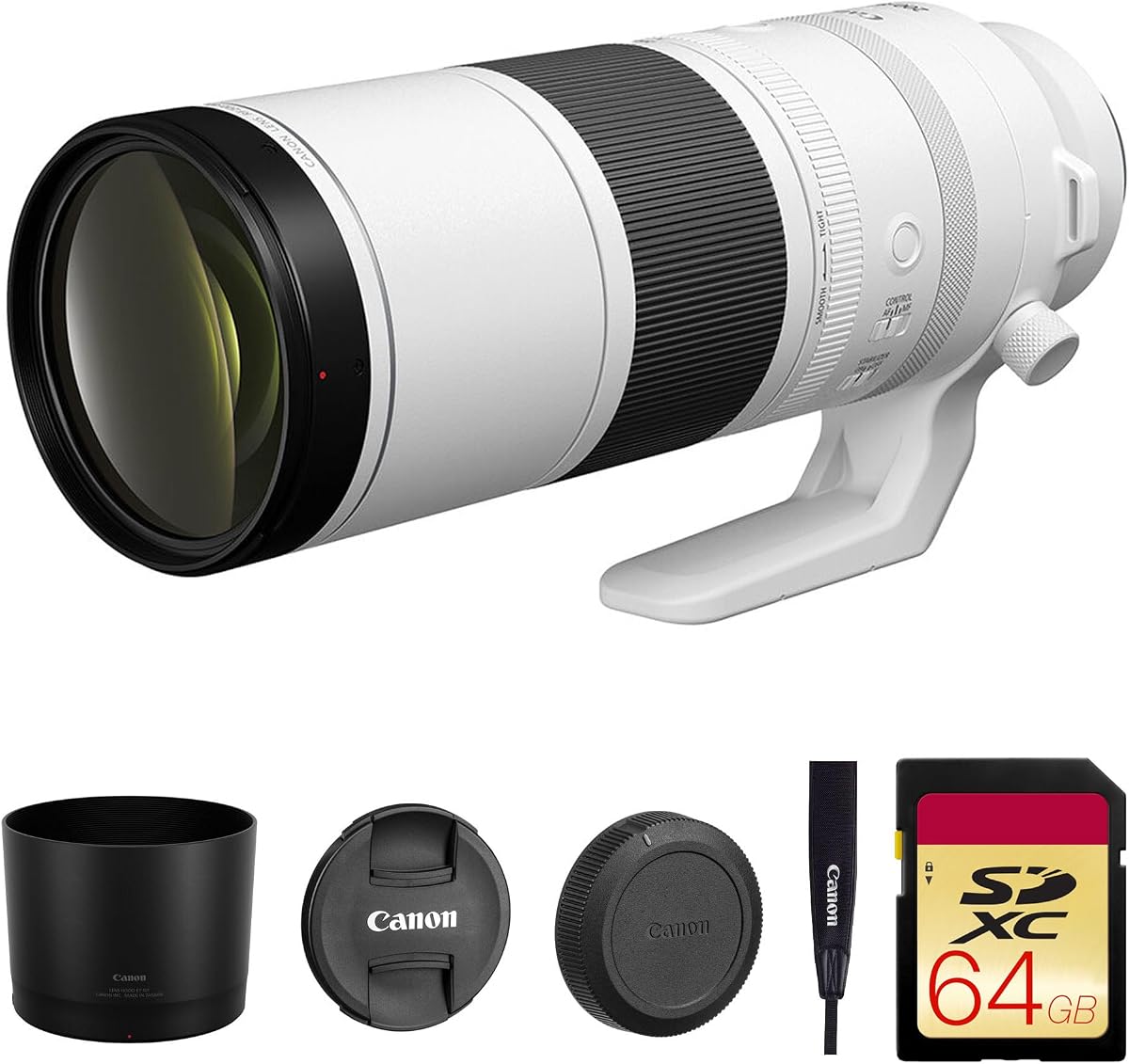
4.7Editor score

4.7Editor score
The following table presents a side-by-side comparison of all ten lenses included in this guide. Use this overview to quickly assess focal ranges, stabilization capabilities, and key specifications before diving into detailed reviews.



This Canon RF lens delivers unmatched reach from 200mm to 800mm, making it ideal for birding and distant wildlife. With a 4.7 rating, users praise its ability to capture fast action with high clarity. The bundle includes a memory card for immediate shooting upon arrival.
We may earn a commission when you buy through this link, at no additional cost to you.
Its built-in image stabilization ensures shake-free photos even at full extension, allowing comfortable handheld tracking. The USM autofocus system locks onto moving subjects quickly and silently, which is crucial for skittish animals. Field-ready design keeps weight manageable despite the powerful optics.
Trade-offs include a reduced aperture of f/9 at 800mm, which may limit low-light performance. Additionally, this lens only works with Canon EOS R series cameras, not DSLRs. However, the optical benefits and stabilization often outweigh these constraints for dedicated users.
If you own an RF body and need serious reach without a tripod, this lens is highly recommended. It balances portability and performance better than most alternatives in its class. Consider it for trips where mobility matters as much as magnification.
The 200mm to 800mm range covers everything from medium telephoto shots to extreme magnification, adapting to varying subject distances seamlessly.
Built-in stabilization compensates for natural camera shake, enabling sharp images without bulky support gear during active shoots.
We may earn a commission when you buy through this link, at no additional cost to you.
This lens sets a new standard with its 800mm telephoto end in an AF super-telephoto zoom format. Reviewers highlight its powerful capabilities for nature and outdoor sports photography. The compact design makes it easier to carry on long hikes compared to traditional options.
We may earn a commission when you buy through this link, at no additional cost to you.
Compatibility with RF extenders adds flexibility, extending reach further when needed without sacrificing too much quality. Optimized optical design maintains sharpness through the entire zoom range, ensuring consistent results. Handheld shooting feels natural due to balanced weight distribution.
It requires a Canon EOS R series camera, limiting use for DSLR owners. The investment is significant, but the performance justifies it for serious wildlife enthusiasts. Those seeking maximum reach in a portable form will find it invaluable.
Perfect for photographers upgrading to mirrorless who need pro-level reach. Its versatility supports both stills and video thanks to smooth focus transitions. Prioritize this if you value cutting-edge technology and mobility.
Users can attach 1.4x or 2x extenders at all focal lengths to push beyond 800mm for extreme distance shots.
RF mount advantages allow high image quality retention across the zoom range within a compact super-telephoto body.
We may earn a commission when you buy through this link, at no additional cost to you.
The Sigma 150-600mm offers a compelling blend of reach and optical quality for EF mount users. Its inclusion of FLD and SLD elements minimizes aberrations, delivering crisp images even at long focal lengths. The bundle provides essential accessories like a cleaning kit.
We may earn a commission when you buy through this link, at no additional cost to you.
An optical stabilizer with accelerometer improves handheld performance significantly. The Hyper Sonic Motor ensures fast and quiet focus acquisition for moving subjects. This lens is designed for full-frame sensors, though it works well on crop bodies too.
While robust, it can be heavier than competitors, requiring a sturdy tripod for extended sessions. The aperture narrows to f/6.3 at 600mm, which may challenge low-light conditions. Still, the build quality and image results remain highly competitive.
Recommended for Canon DSLR owners wanting a reliable long lens without breaking the bank. It balances professional features with accessible pricing. Ideal for birding and wildlife where clarity matters most.
One FLD and three SLD elements reduce chromatic aberration to ensure clean edges and accurate color throughout the zoom.
The Hyper Sonic Motor delivers rapid autofocus speed with minimal noise, essential for not disturbing wildlife during focus.
We may earn a commission when you buy through this link, at no additional cost to you.
This manual telephoto lens is designed for photographers seeking extreme reach at a budget friendly price. It pairs well with various Canon DSLR models, offering compatibility across the EOS range. The high index low dispersion glass helps maintain image sharpness.
We may earn a commission when you buy through this link, at no additional cost to you.
The included 2X teleconverter doubles the power to 1000mm, bringing distant wildlife closer than expected. Manual focus gives complete creative control over exposure and composition. It is built to withstand outdoor rigors with a durable finish.
However, lacking autofocus makes tracking moving subjects difficult, especially for beginners. Manual aperture adjustments can slow down reaction times in dynamic scenarios. This lens is best suited for static subjects or patient shooters.
Choose this if you want to experiment with extreme magnification without a large investment. It works well for landscapes or slow-moving wildlife where precision manual focusing is possible. Ideal for hobbyists on a tight budget.
The 2X teleconverter boosts power to 1000mm, bringing distant subjects much closer for detailed captures.
Manual focus and aperture allow full creative control for tailored shots without automatic restrictions.
We may earn a commission when you buy through this link, at no additional cost to you.
This L-series lens offers professional image quality with its advanced optical construction and stabilization. It covers a versatile 100-400mm range ideal for wildlife and sports photography. The bundle adds a filter kit and lens cap keeper for extra protection.
We may earn a commission when you buy through this link, at no additional cost to you.
Optical stabilization reduces shake by up to two stops, improving handheld performance in lower light. Ring-type USM autofocus is fast, precise, and quiet, allowing seamless focus transition. A panning mode assists in tracking moving animals continuously.
The 400mm limit may feel short for very distant subjects compared to others. It only supports EF mount DSLRs, excluding newer mirrorless bodies without adapters. Despite this, its build and optics remain industry standard for many.
Highly recommended for professional or serious photographers needing reliable performance in varied conditions. Use it when mobility and speed matter alongside image quality. Check compatibility with your current camera before purchasing.
Fluorite, Super UD, and aspherical elements minimize aberrations for sharp, high-contrast images throughout the zoom range.
Built-in optical image stabilization improves handheld shooting, with dedicated panning mode for tracking moving subjects.
We may earn a commission when you buy through this link, at no additional cost to you.
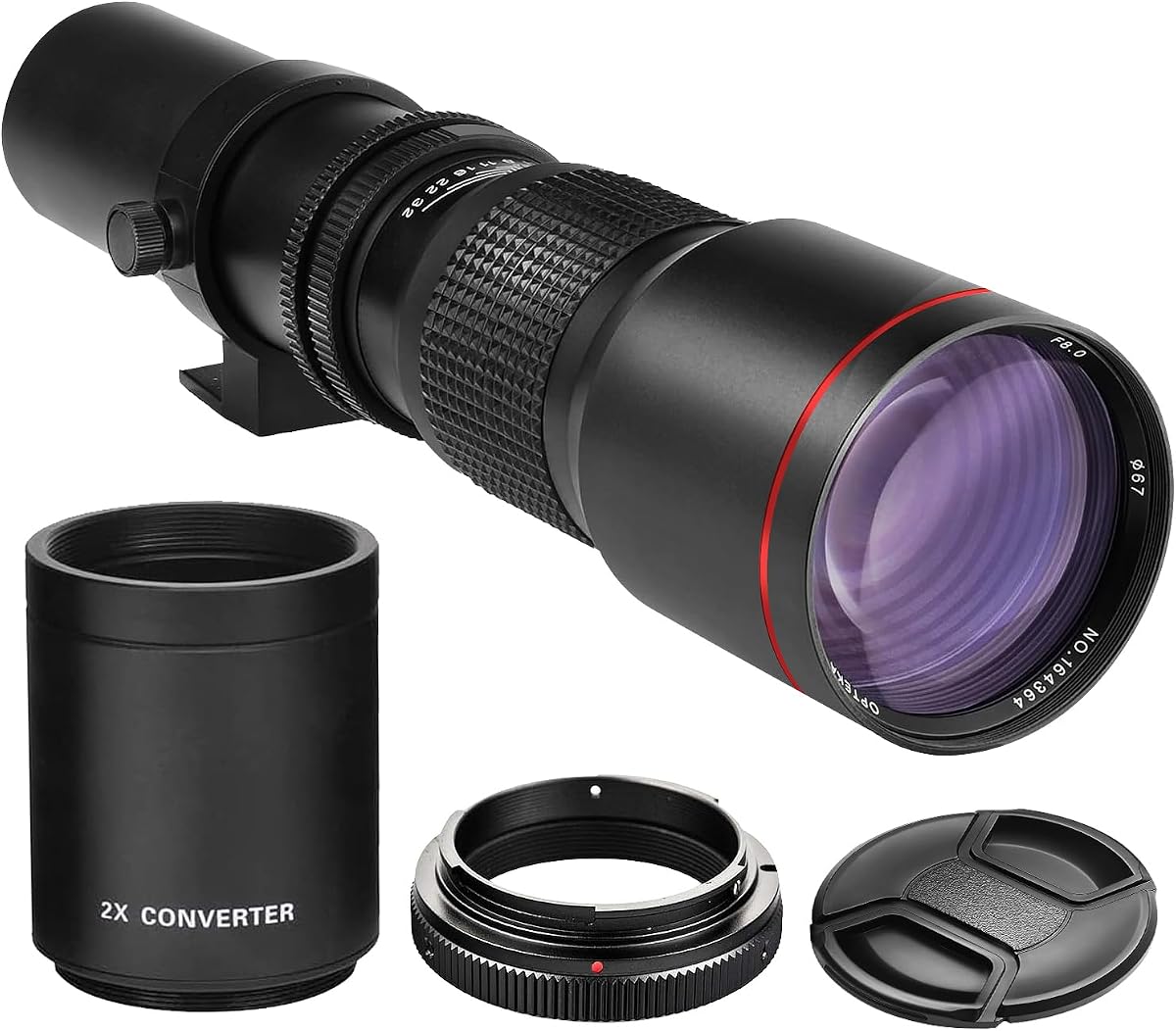
This 420-1600mm lens provides incredible reach for those on a budget. It fits a variety of Canon DSLR models, making it accessible to many users. Enhanced zoom capability allows capturing details from far away that standard lenses miss.
We may earn a commission when you buy through this link, at no additional cost to you.
A 2X teleconverter doubles the range to 1600mm, enabling shots of extremely distant subjects. Manual zoom and focus offer precise control over framing and exposure. EF mount compatibility ensures it pairs easily with most Canon DSLRs.
Lacking stabilization means a tripod is often necessary for sharp images at full power. Manual operation requires patience and steadiness, which might challenge casual shooters. However, the price-to-reach ratio is unmatched in this category.
Ideal for hobbyists exploring extreme magnification without spending a fortune. It works well for static wildlife or distant landscapes where stability can be managed. A great starting point for beginners wanting long reach.
The 2X teleconverter doubles lens power to 1600mm, bringing subjects much closer than typical zooms.
Manual zoom and focus provide full control over composition and detail for deliberate shooting.
We may earn a commission when you buy through this link, at no additional cost to you.
This RF lens balances portability with performance for mirrorless shooters. Its compact design makes it easy to carry during outdoor adventures. Up to 5.5 stops of shake correction helps maintain sharp handheld images even in less than ideal light.
We may earn a commission when you buy through this link, at no additional cost to you.
The Nano USM system delivers high speed autofocus that is smooth and quiet. Minimum focusing distance allows for macro-like work at 400mm. When paired with EOS R bodies, stabilization improves further with IBIS integration.
The f/8 aperture at 400mm may limit use in low light without higher ISO settings. While versatile, it does not match the extreme reach of 800mm options. Still, its size and weight make it very practical.
Recommend this for travelers or hikers who want a long lens without the bulk. It suits wildlife photography where mobility is critical. Check your EOS R compatibility before buying.
Up to 5.5 stops of shake correction improve handheld shooting stability significantly.
High speed, smooth, and quiet autofocus enhances tracking of fast wildlife.
We may earn a commission when you buy through this link, at no additional cost to you.
This classic entry level telephoto lens provides basic zoom capability for casual shooters. It weighs only 16.8 ounces and fits many Canon SLR models comfortably. The improved zoom mechanism offers smoother operation than previous iterations.
We may earn a commission when you buy through this link, at no additional cost to you.
At 300mm, it captures medium distance subjects reasonably well for daylight use. Its lightweight design makes it easy to hold for extended periods. The 4.9-foot minimum focus allows decent close-up potential for nearby nature shots.
Lacking image stabilization means using faster shutter speeds or a tripod for sharp results. Optical quality drops off at full zoom, especially in lower light. It is not meant for professional work but for learning.
Best for beginners wanting to test telephoto photography without investment. It works well for static wildlife or landscapes in good light. Prioritize this only if budget is your main concern.
The improved zoom mechanism and silver ring on the front make adjustments smoother.
Measuring 2.8 inches in diameter and weighing 16.8 ounces, it is easy to carry.
We may earn a commission when you buy through this link, at no additional cost to you.
Designed for Nikon sensors, this lens delivers versatile reach from 300mm to 750mm equivalent on DX. It features three ED elements to reduce color fringing and ensure sharpness. The bundle includes a filter kit and cleaning essentials.
We may earn a commission when you buy through this link, at no additional cost to you.
Silent Wave Motor ensures rapid autofocus with full manual override. Vibration Reduction provides up to 4.5 stops of stabilization for steady shots. A Sport mode is ideal for tracking fast action in wildlife photography.
The lens is heavier and requires sturdy support for handheld use at full power. It is compatible with Nikon D series bodies but excludes Z mount without adapter. Build quality supports long-term outdoor field use.
Choose this if you shoot Nikon DSLR and need reliable long-range capability. It is a strong performer for birds and distant animals. Confirm your camera compatibility before purchasing.
Three extra-low dispersion elements diminish color fringing and chromatic aberrations for superior clarity.
Dedicated Sport Mode assists in tracking fast-paced moving subjects during active wildlife sessions.
We may earn a commission when you buy through this link, at no additional cost to you.
This renewed version offers the same core performance as the standard model at a lower price. It retains the DC autofocus motor and 300mm focal range for basic wildlife and sports work. The 58mm filter thread allows standard accessories to be used.
We may earn a commission when you buy through this link, at no additional cost to you.
Improved zoom mechanism ensures smoother operation during shots. Weighing 16.8 ounces, it is easy to manage in the field. Condition varies by seller, but most units are fully functional with tested optics.
It lacks image stabilization, which may limit low light or handheld shots. Renewed items may show cosmetic signs of use though functionality remains intact. This is a practical choice for budget conscious buyers.
Recommend this for casual shooters needing a proven telephoto lens without premium cost. It works well for daylight wildlife and static subjects. Always check seller ratings before purchasing renewed items.
Renewed condition offers lower cost while maintaining the same optical specifications as the new version.
A 58mm filter thread allows use of standard filters for protection and effect.
We may earn a commission when you buy through this link, at no additional cost to you.
Selecting the right lens for wildlife photography depends on your camera body, budget, and target subjects. Consider these factors to match your needs accurately.
Focal length determines how close distant subjects appear. Lenses ranging from 300mm to 800mm offer varying levels of magnification. Longer reach helps capture elusive animals without intrusion, but may require a tripod for stability.
Choose a range that fits your typical subject distances. For birds in trees, 600mm or more is often necessary. For larger mammals at a safe distance, 400mm may suffice depending on crop sensor size.
Wildlife moves quickly, so fast autofocus is essential. USM or Silent Wave Motors provide rapid and silent focus acquisition. This prevents noise that could scare animals and ensures sharp captures of motion.
Look for lenses with advanced focus systems. Manual focus options are useful for static subjects but less practical for action. Prioritize autofocus for dynamic shooting environments.
Stabilization compensates for camera shake, enabling handheld shooting at long focal lengths. Optical or Vibration Reduction systems can provide several stops of correction. This allows faster shutter speeds to freeze motion without a tripod.
Consider stabilization strength if you plan to shoot handheld often. High-end lenses often include more effective systems. For budget options, a sturdy tripod may be a better alternative to rely on for stability.
Ensure the lens matches your camera mount type, such as Canon EF, RF, or Nikon F. Some lenses only work with specific systems, so verify compatibility before buying. Adapters exist but may limit performance or autofocus speed.
Mirrorless systems offer newer technology but may require specific lens lines. DSLR owners should check legacy EF or F mount compatibility. Consistency ensures you get the full benefit of the lens design.
Wildlife photography often happens in harsh environments. Robust construction and weather sealing protect against dust and moisture. Professional lenses typically offer better durability and reliability under stress.
Check for magnesium alloy bodies or sealed elements. If you shoot in rain or dust, prioritize weather-resistant options. For occasional use, standard build may be sufficient.
Prices vary significantly from budget manual lenses to professional options. Balance your financial limits with performance needs. Often, older models or renewed items offer excellent value without sacrificing critical features.
Consider total cost including filters, tripods, and accessories. Sometimes a mid-range lens with stabilization is better than a long manual lens without it. Evaluate long-term benefits versus initial savings.
APS-C sensors provide a crop factor that extends reach effectively. For example, a 200mm lens on an APS-C body acts like 320mm. This can reduce the need for extreme focal lengths for distant subjects.
Ensure the lens is designed for full-frame if you plan to upgrade later. Full-frame coverage offers better edge sharpness and versatility. Check manufacturer notes for sensor compatibility recommendations.
To achieve sharp images with long lenses, always use fast shutter speeds to counter camera shake. A general rule is to set the shutter speed to at least the inverse of the focal length. Use burst mode to increase chances of capturing moving wildlife.
Keep your lens clean by wiping it gently with a microfiber cloth and using air blowers to remove dust. Store it in a dry place to prevent mold on the optics. Protect the front element with a UV filter for easy maintenance during outdoor sessions.
Use a tripod or monopod to reduce fatigue and improve stability. Ensure the lens is balanced on the support to prevent strain on the mount. Practice panning techniques to track animals smoothly across the frame for dynamic shots.
Most wildlife photographers prefer 400mm to 600mm as a versatile starting point. This range allows close framing without intruding too far. If budget permits, 800mm or more provides extreme reach for distant subjects.
Using a tripod is highly recommended for lenses over 300mm to ensure sharp images. Handheld shooting becomes difficult as focal length increases. However, lenses with strong stabilization can be handheld for short periods if lightweight.
It depends on the lens mount. RF and Z mount lenses work natively on mirrorless bodies. EF and F mount lenses may require adapters to function. Always check compatibility before purchasing.
Start by blowing away dust with a rocket blower to avoid scratches. Use a microfiber cloth to wipe fingerprints gently from the front element. Avoid using harsh chemicals or touching the glass directly with fingers.
Autofocus is usually better for moving wildlife as it locks on quickly. Manual focus helps with static subjects or tricky light. Many modern lenses offer hybrid systems for flexibility in various scenarios.
A maximum aperture of f/5.6 to f/8 is common for long lenses. Wider apertures help in low light but are heavier and pricier. f/8 is often sufficient in daylight for crisp results.
This guide reviewed ten top camera lenses for wildlife photography, highlighting options for different needs. The Canon RF 200-800mm bundle stands out for reach and stabilization, while Sigma offers premium glass for EF users. Budget manual lenses provide extreme reach for those willing to trade autofocus.
Prioritize your camera mount, typical subject distance, and budget when making a decision. Stabilization and autofocus speed often matter more than maximum focal length for sharp results. Ensure any choice aligns with your long-term photography goals.
Prices and availability fluctuate regularly so verify current offers before buying. Bundle deals may add value like cleaning kits or memory cards. Always check recent reviews and compatibility notes to confirm the lens fits your setup.