
Omada AX3000 Wireless Access Point
4.5Editor score
Free Cloud Management
5 Year Warranty Included
Ultra Slim Design
This guide compares the top ten commercial wireless routers for 2026, evaluating performance, security, and scalability for modern business networks.
Choosing the right commercial wireless router is critical for maintaining reliable connectivity in today's fast-paced business environment. A high-quality solution ensures seamless communication, secure data transfer, and optimal performance across all connected devices.
We evaluated ten leading models based on real-world performance metrics, security features, ease of management, and scalability options. Our analysis focuses on how each router handles dense device environments and supports diverse business workflows effectively.
Each selection highlights specific strengths tailored to different operational needs, from small offices to large enterprises. Please note that product availability and specifications may vary, so verify current details before making a final purchasing decision.
4.5Editor score
4.2Editor score

The following table provides a side-by-side comparison of all ten selected models, highlighting their core specifications and unique selling points to help you make an informed decision.




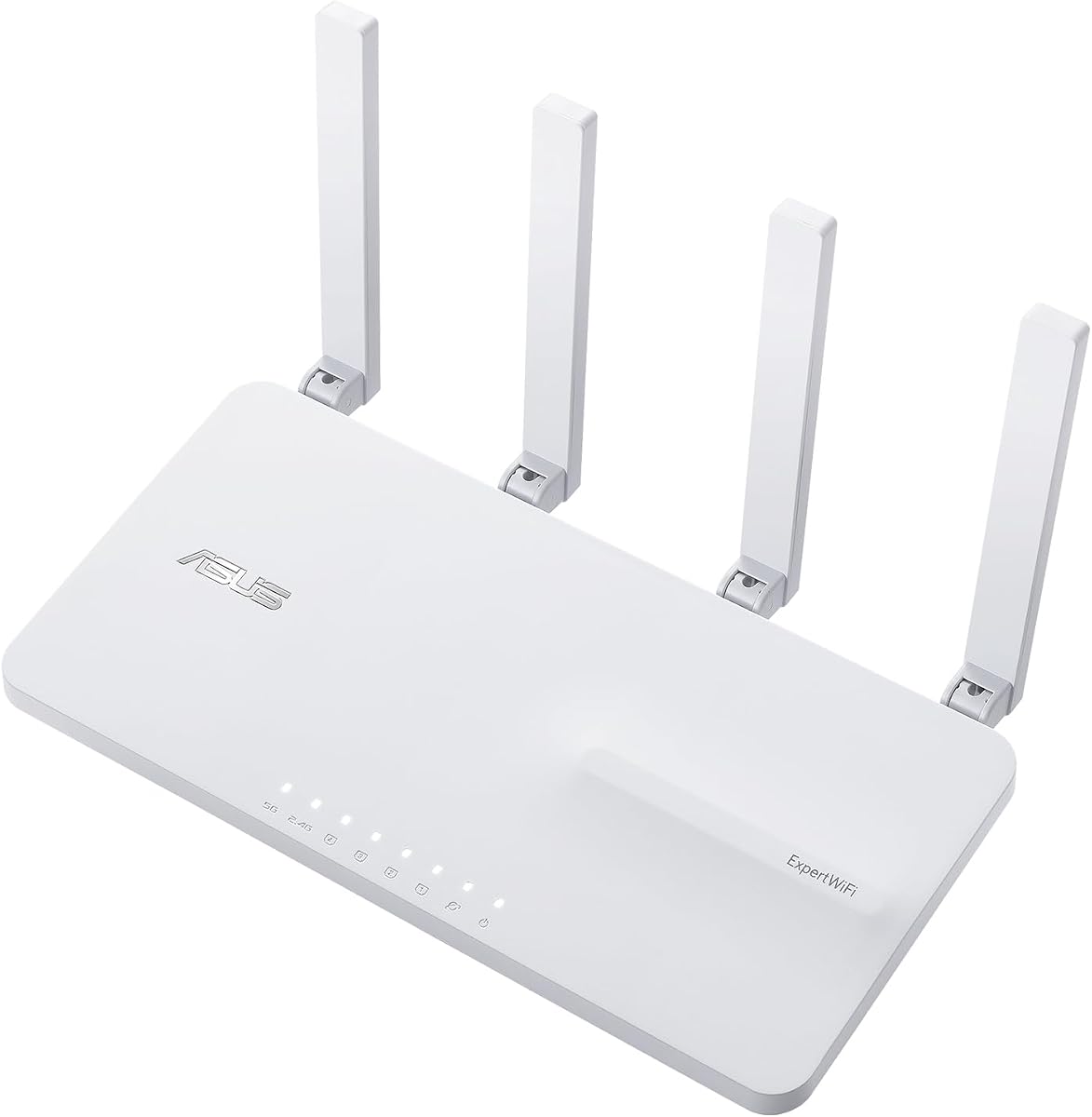
The ASUS ExpertWiFi EBR63 stands out as a robust solution for modern business environments requiring secure and scalable connectivity. It offers a rating of 4.2 stars based on user feedback, reflecting strong satisfaction with its performance and ease of use.
We may earn a commission when you buy through this link, at no additional cost to you.
Its standout qualities include the ability to create up to five separate SSIDs, allowing you to segment traffic for guests, employees, and IoT devices effectively. The custom guest portal feature lets you brand your network access points to match your business identity.
Honest trade-offs involve the lack of multi-gigabit wired ports, which might limit high-speed backhaul scenarios. However, for most office setups, the Gigabit Ethernet speed is sufficient to handle daily operations without bottlenecks.
Businesses needing reliable security and simple management should buy this router. The included free commercial-grade security and VPN support make it an excellent choice for organizations prioritizing safety without extra costs.
Customize your guest portal to fit your brand style while keeping visitor traffic separate from internal operations.
Use the USB port as a backup WAN by connecting a mobile hotspot to ensure internet stays up during outages.
We may earn a commission when you buy through this link, at no additional cost to you.
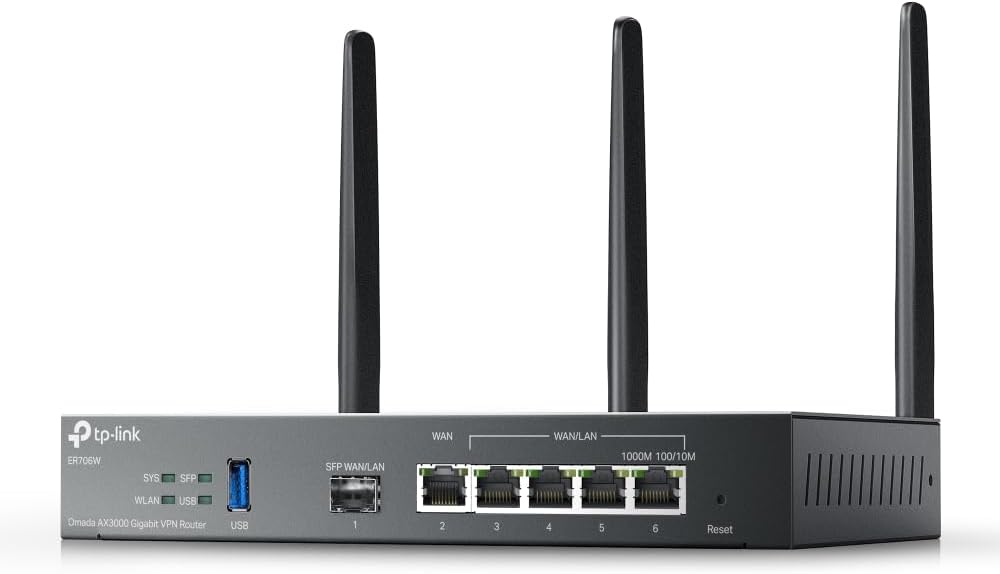
The Omada ER706W is a powerful VPN router designed for businesses that need robust load balancing and secure connections. It has a rating of 4.1 stars, indicating solid performance in demanding network scenarios.
We may earn a commission when you buy through this link, at no additional cost to you.
Its key strengths lie in its ability to handle multiple WAN connections, raising utilization rates through intelligent load balancing. The integrated SFP slot adds flexibility for fiber connections, while extensive VPN support ensures secure remote access.
Trade-offs include the dependency on an Omada controller for advanced SDN features, which adds a layer of complexity. This requirement might be a hurdle for smaller teams without dedicated IT staff.
Network administrators needing multi-line broadband management should choose this router. Its high-security VPN options and load balancing features make it ideal for enterprises requiring redundant internet links.
Load balancing across up to five WAN ports ensures your business stays online even if one provider fails.
Support for multiple VPN protocols allows secure connections for remote workers across different networks.
We may earn a commission when you buy through this link, at no additional cost to you.
The Ruckus R750 is an indoor Wi-Fi 6 access point engineered to handle ultra-dense environments where many devices connect simultaneously. With a rating of 4.3 stars, it delivers consistent performance in busy office or public settings.
We may earn a commission when you buy through this link, at no additional cost to you.
Its standout quality is its ability to maintain high speeds even when dozens of devices compete for bandwidth. The design focuses on capacity and stability, making it ideal for stadiums, conference centers, or large offices.
Trade-offs include the need for a separate controller to manage multiple units effectively, which increases total system cost. However, this centralized management is standard for enterprise-grade deployments.
Large venues requiring consistent connectivity for crowds should buy this access point. Its proven track record in high-density scenarios ensures users experience minimal slowdowns during peak times.
Designed specifically for ultra-dense environments where standard routers often struggle to maintain speed.
Indoor design ensures signal propagation is optimized for office or public interior building layouts.
We may earn a commission when you buy through this link, at no additional cost to you.
The Ruckus R670 represents the cutting edge of wireless technology as a Wi-Fi 7 access point with Unleashed management. It offers exceptional data rates up to 9.34 Gbps, making it suitable for future-proof networks.
We may earn a commission when you buy through this link, at no additional cost to you.
Key strengths include its patented BeamFlex+ adaptive antenna technology which maximizes signal coverage and capacity. The inclusion of a 5 GbE port eliminates bottlenecks for high-speed multi-gigabit wired connections.
Trade-offs involve the high cost and the need for Wi-Fi 7 clients to fully utilize its speeds. This investment is best suited for enterprises prioritizing top-tier performance and advanced wireless capabilities.
High-end deployments needing maximum throughput should choose this access point. Its advanced security and high-speed ports ensure a seamless experience for demanding applications like VR and high-res video.
Achieve data rates up to 9.34 Gbps to support the bandwidth demands of modern streaming and conferencing.
BeamFlex+ technology dynamically adjusts antenna patterns to optimize signal strength and minimize errors.
We may earn a commission when you buy through this link, at no additional cost to you.
The NETGEAR Orbi 970 Series is a high-performance mesh system capable of blanketing large areas with seamless Wi-Fi 7 coverage. Rated at 4.6 stars, it delivers excellent reliability for environments needing extensive reach.
We may earn a commission when you buy through this link, at no additional cost to you.
Its standout qualities include a dedicated quad-band backhaul lane ensuring speeds stay fast across every device. The ability to support up to 200 devices and cover 10,000 sq ft makes it powerful for expansive spaces.
Trade-offs involve its premium price, which may be excessive for smaller offices. However, the inclusion of 10 Gig Ethernet ports ensures wired backhaul connections are future-ready.
Organizations with large floor plans should consider this mesh system. Its ability to eliminate dead zones while maintaining high speeds makes it a top choice for sprawling commercial environments.
A router and two satellites create seamless coverage up to 10,000 sq ft with zero dead zones.
10 Gig ports on routers and satellites provide ultra-fast wired links for high-speed local file transfers.
We may earn a commission when you buy through this link, at no additional cost to you.
The Omada EAP650 is a versatile AX3000 access point designed to deliver ultra-fast Wi-Fi 6 speeds at an affordable price point. With a 4.5 star rating, it is a favorite for cost-conscious businesses needing reliable connectivity.
We may earn a commission when you buy through this link, at no additional cost to you.
Its key strengths include free cloud management and a 5-year warranty that ensures long-term reliability without extra fees. The ultra-slim design blends into modern offices, hotels, or cafes without disrupting aesthetics.
Trade-offs include that it is an access point only requiring a router for gateway functions. This modularity allows scaling up by adding more units as your network grows.
Small to medium businesses needing scalable Wi-Fi should buy this access point. Its easy installation and flexible power options make it a practical solution for diverse commercial spaces.
Manage your entire network from the cloud without needing dedicated hardware controllers or software.
Supports multiple power options including PoE, passive PoE, and DC adapters for easy deployment.
We may earn a commission when you buy through this link, at no additional cost to you.
The Ubiquiti U6+ is a dual-band access point providing reliable and efficient wireless connectivity for modern business networks. Rated at 4.6 stars, it is known for its consistent performance and ease of integration.
We may earn a commission when you buy through this link, at no additional cost to you.
Its standout qualities include a high-speed data transfer rate of up to 3 Gbit/s ensuring efficient communication. PoE+ support allows power delivery over a single cable simplifying installation in places without power outlets.
Trade-offs include dependency on the UniFi Controller for full management features which may be complex for new users. The wall mountable form factor is ideal for ceiling installations but less flexible for desktop use.
Businesses seeking professional-grade wireless coverage should choose this access point. Its reliable connection quality and high-speed data transfer make it a solid choice for daily office operations.
Receive data and power through a single PoE+ cable reducing clutter and simplifying installation.
Advanced encryption features effectively protect valuable business data from unauthorized access attempts.
We may earn a commission when you buy through this link, at no additional cost to you.
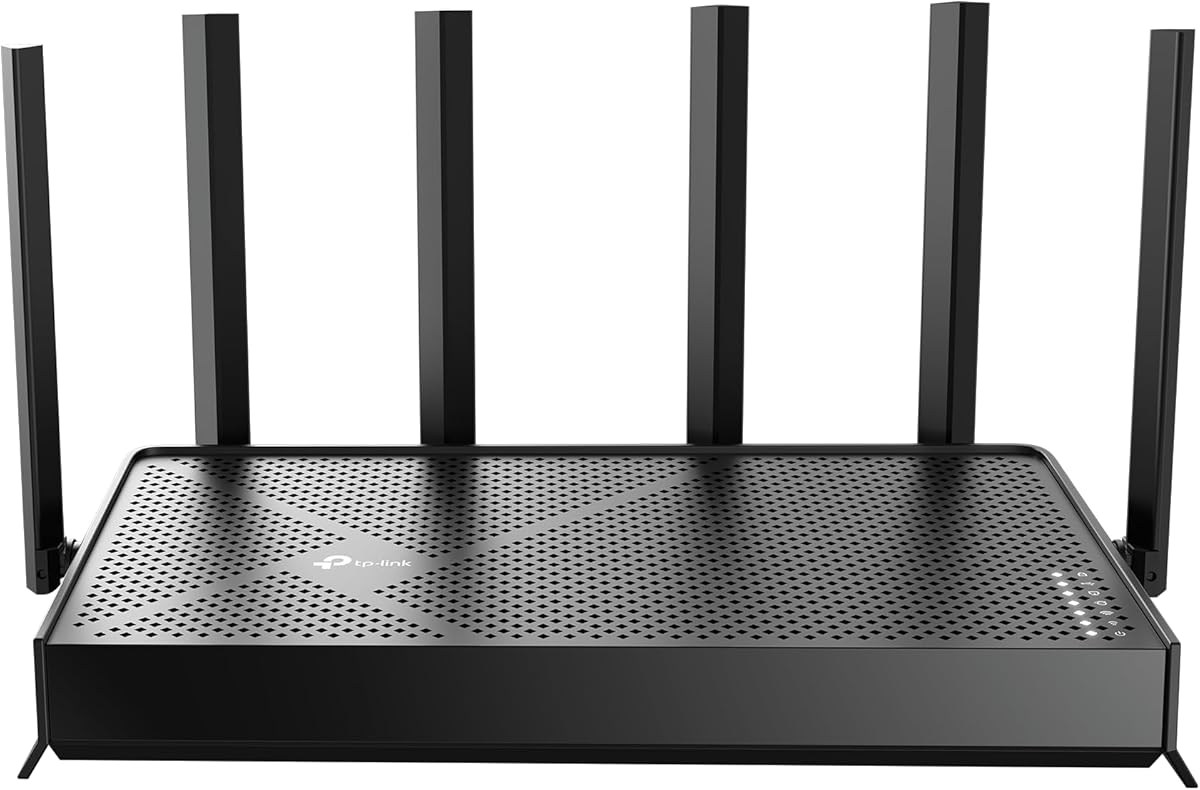
The TP-Link BE6500 is a future-ready dual-band router designed with the latest Wi-Fi 7 technology for optimized performance. With a 4.3 star rating, it is a strong option for users needing high-speed connectivity.
We may earn a commission when you buy through this link, at no additional cost to you.
Its key strengths include Multi-Link Operation (MLO) allowing simultaneous data transfer across bands for lower latency. The 6-stream design delivers up to 6.5 Gbps total bandwidth supporting seamless 8K streaming and gaming.
Trade-offs include a coverage limit of 2400 sq ft which may not suit larger offices. However, its compatibility with EasyMesh helps expand coverage if needed.
Businesses needing next-gen router speeds should buy this model. Its secure design and high-speed ports make it a practical choice for modern digital environments.
Multi-Link Operation transfers data across bands simultaneously delivering lower latency and improved reliability.
2.5 Gbps ports allow high-speed wired data transmissions perfect for NAS drives and gaming PCs.
We may earn a commission when you buy through this link, at no additional cost to you.
The NETGEAR Nighthawk WiFi 7 Router delivers faster and more reliable connectivity for busy homes and offices. Rated at 4.3 stars, it is built to keep up with growing connected home demands.
We may earn a commission when you buy through this link, at no additional cost to you.
Its standout qualities include a dedicated tri-band setup with a third high-speed band ensuring nothing slows down. The multi-gig ready wired connections support up to 2.5 Gig LAN ports for fast local transfers.
Trade-offs include a range limited to 2500 sq ft which may not cover large multi-story homes. However, its high-speed wired options make it ideal for focused business zones.
Networks needing high-speed tri-band performance should choose this router. Its ability to handle up to 100 devices simultaneously ensures smooth operation for multiple users.
A dedicated third high-speed band keeps your fastest devices moving without slowing down other users.
Unlock multi-gig internet plans by plugging your modem into the 2.5 Gig WAN port for faster access.
We may earn a commission when you buy through this link, at no additional cost to you.
The ASUS RT-BE88U is a high-performance WiFi 7 router designed to unleash demanding network applications with dual 10G ports. Rated at 4.3 stars, it supports massive wired capacity for advanced commercial needs.
We may earn a commission when you buy through this link, at no additional cost to you.
Its key strengths include one 10G SFP+ port and one standard 10G WAN/LAN port bolstering wired network capacity up to 34G. The quad-core CPU ensures always-on performance even with heavy traffic loads.
Trade-offs involve the complexity and cost which may be excessive for standard offices. However, for data centers or high-speed labs, its capacity is unmatched.
Enterprises needing massive wired backhaul should buy this router. Its versatile WAN configuration and high-speed ports make it the ideal choice for bandwidth-intensive workflows.
Bolster your wired network capacity with two 10G ports for massive local file transfer speeds.
Establish always-on internet with AI WAN detection and USB 4G/5G mobile tethering support.
We may earn a commission when you buy through this link, at no additional cost to you.
Selecting the right router requires evaluating speed, security, and scalability against your specific business requirements.
Current standards like WiFi 6, WiFi 6E, and WiFi 7 offer varying speeds and device capacities. WiFi 7 is the latest offering highest throughput but may be pricey for basic needs.
Choose the standard that matches your budget and device density to ensure optimal performance without overspending.
Commercial routers must include enterprise-grade security like WPA3 and advanced threat protection. Look for vendors providing free or affordable subscription-based security suites.
Prioritize models with built-in firewalls and regular firmware updates to safeguard sensitive business data.
Consider how easy it is to expand the network as your business grows. Mesh systems and SDN platforms allow adding units without complex rewiring.
Select a solution that supports easy expansion through APs or additional nodes to meet future demand.
Businesses often lack dedicated IT staff so simple management interfaces are crucial. Cloud-based apps or intuitive dashboards simplify setup and monitoring.
Choose a system with remote management capabilities to reduce maintenance time and operational costs.
Modern offices still rely on wired connections for desktops and servers. Ensure the router has enough Gigabit or multi-gigabit ports for stable wired links.
Verify the port speed matches your internal network requirements to avoid bottlenecks in wired transfers.
Reliable technical support and a strong warranty are essential for business continuity. Look for providers offering dedicated business support channels.
Check warranty duration and coverage details to ensure you are protected against hardware failures.
Providing secure guest access is vital for customer-facing businesses. Features like separate SSIDs and captive portals enhance the visitor experience.
Ensure the router allows customizable guest portals and isolation from internal networks for safety.
Balance your budget with the performance needed for your specific applications. High-end routers offer better features but may be overkill for small setups.
Invest in a model that meets your current needs while leaving room for future upgrades.
Place the router in a central location away from interference sources like microwaves or thick walls to ensure optimal signal coverage. Ensure it is elevated for better propagation across the space.
Regularly update the router's firmware to patch security vulnerabilities and improve performance. Most devices offer automatic update options to simplify this task.
Monitor connected devices frequently to identify any unauthorized access or bandwidth hogging. Use the management app to set guest network limits and maintain network health.
Business routers often include advanced security features, support for multiple SSIDs, and better scalability options. They typically handle more concurrent connections and offer dedicated customer support compared to standard home models.
It depends on the model. Some access points work standalone while others require a hardware or cloud controller for centralized management. Always check the product specifications before purchasing to ensure compatibility with your setup.
Yes, commercial routers can be used in home offices and often provide better reliability. However, they may offer more features than necessary which could increase costs and complexity for simple setups.
A guest portal is a landing page that visitors see when connecting to a network. It allows you to brand the experience and control access terms while keeping guest traffic separate from your internal data.
Enable WPA3 encryption, change default passwords, and keep firmware updated. Use separate SSIDs for different user groups and enable built-in security features like firewalls and intrusion detection.
Mesh WiFi uses multiple nodes to create a seamless network across large areas. Instead of a single router, satellites work together to eliminate dead zones and extend coverage without needing separate networks.
The ASUS ExpertWiFi EBR63 leads as an overall choice with its balance of security and ease of use. For large areas, the NETGEAR Orbi 970 mesh system provides unmatched coverage and reliability.
Prioritize security features and scalability when making your final decision. Ensure the chosen model aligns with your specific business needs and future growth plans.
Check current availability and verify all details before purchasing since offerings may change. Investing in the right router today ensures stable connectivity for your business operations tomorrow.