
Sky-Watcher Heritage 130mm
4.5Editor score
Collapsible tube design for storage
Includes two eyepieces and finder
Compact tabletop footprint for travel
Dobsonian telescopes offer an unparalleled combination of large aperture and simple mechanics, making them ideal for deep sky observation. Their intuitive altazimuth mounts allow anyone to point and view quickly without complex setup procedures or expensive tracking systems.
We evaluated ten leading models based on optical quality, portability, ease of use, and overall value. Our analysis includes tabletop options for beginners as well as full-size instruments designed for serious enthusiasts seeking maximum light gathering power in the field.
Each selection highlights specific strengths like app integration, collapsible tubes, or premium coatings. Please note that availability and pricing fluctuate frequently, so verify current details before purchasing to ensure you get the best deal available today.
4.5Editor score

4.4Editor score

4.3Editor score
As an Amazon Associate we earn from qualifying purchases.
The following table provides a quick side-by-side overview of all ten models, highlighting key specifications like aperture size, focal length, and special features to help you compare options at a glance.




The Celestron StarSense Explorer 10-inch stands out as a premier choice for modern astronomers. Its rating reflects strong user satisfaction with how seamlessly it integrates smartphone technology into traditional observing. This model bridges the gap between technical complexity and casual enjoyment perfectly.
We may earn a commission when you buy through this link, at no additional cost to you.
Its patented StarSense technology analyzes the sky overhead to locate your position instantly. You simply dock your phone, follow on-screen arrows, and the bullseye turns green when aligned. The 254mm reflector provides sharp vivid views of Jupiter's cloud bands and the Orion Nebula.
While the base is sturdy it adds weight compared to smaller tabletops. Also you must ensure your phone battery stays charged during sessions. These trade-offs are minor given how much time the app saves finding objects in the dark.
Anyone wanting a powerful telescope without learning star charts should buy this. It makes deep sky viewing accessible to everyone. The included warranty and support further cement its value as a top pick for new enthusiasts.
The app creates a curated list of best targets based on time and location so you never waste time hunting.
High-reflectivity XLT coatings ensure light transmission is maximized for vibrant detailed views of faint galaxies.
We may earn a commission when you buy through this link, at no additional cost to you.
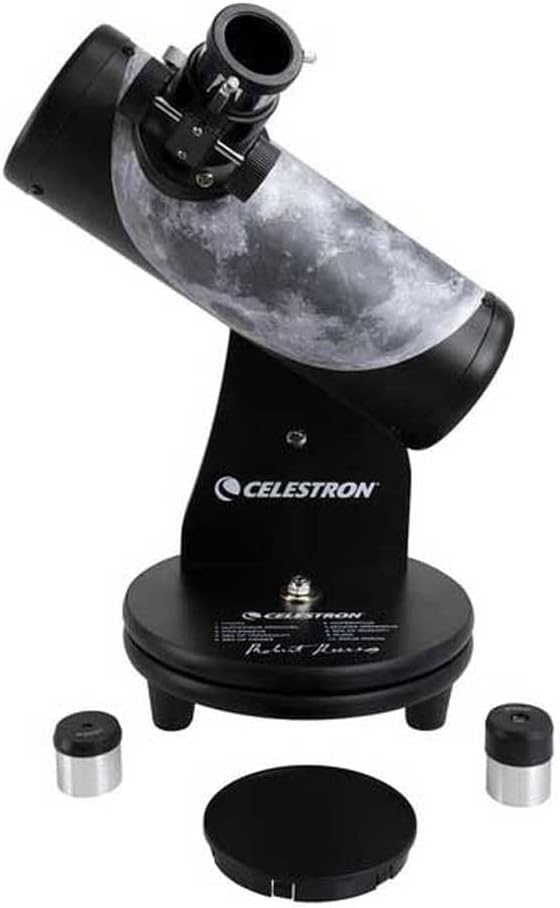
The Sky-Watcher Heritage 130mm is an exceptional budget telescope designed for immediate use. It offers over five inches of aperture at a fraction of the cost of larger models. Its all-in-one design means it arrives fully assembled and ready to go.
We may earn a commission when you buy through this link, at no additional cost to you.
Users appreciate the innovative collapsible tube which allows for easy storage. The box includes two eyepieces and a starpointer finder which adds significant value. It delivers sharp views of the Moon and planets despite its compact size.
The main limitation is that it sits on a table rather than standing on the floor. This restricts viewing angles for objects low on the horizon. However for casual observing on a patio this is rarely a dealbreaker.
Beginners or those with limited space will find this ideal. It removes barriers to entry like complex setup or high costs. If you want a reliable instrument to learn the basics this is the smart choice.
The compact footprint makes it easy to transport to dark sky sites without needing a dedicated vehicle.
Having eyepieces and a finder included saves money compared to buying optics and accessories separately later.
We may earn a commission when you buy through this link, at no additional cost to you.
The Sky-Watcher Virtuoso GTI 150P combines traditional Dobsonian simplicity with modern automation. Its collapsible design offers 150mm of aperture in a portable package. The built-in Wi-Fi allows full GoTo performance through the SynScan Pro app for seamless tracking.
We may earn a commission when you buy through this link, at no additional cost to you.
Patented Freedom Find technology uses dual encoders to let you control manually while retaining alignment. This hybrid approach offers flexibility whether you want automatic tracking or manual slewing. The f/5 optics provide fast light gathering for bright planetary views.
It does require a power source to run the motors and electronics which adds a small logistical step. The price is higher than basic manual scopes but justified by the convenience. Battery life is sufficient for most sessions.
Tech-savvy users or those who value time efficiency will love this. It removes the guesswork from finding faint deep-sky objects. For a tabletop experience with full automation this is the top tier choice.
The Wi-Fi connection allows precise computer-controlled pointing without needing separate hand controllers or cables.
Freedom Find lets you move manually and still keep the sky alignment intact for future automated use.
We may earn a commission when you buy through this link, at no additional cost to you.
The Sky-Watcher Heritage 150 delivers a large 150mm aperture in a portable tabletop format. Its borosilicate parabolic primary mirror ensures crisp contrast-rich views of the Moon and planets. The design retains collimation well despite the collapsible nature.
We may earn a commission when you buy through this link, at no additional cost to you.
Users enjoy the fast f/5 focal ratio which gathers significant light for deep sky objects. The 1.25-inch helical focuser allows for precise focusing. Rubber feet minimize vibration to keep the image steady during observation.
As a tabletop unit it is limited to eye-level viewing. You need to be seated to use it comfortably which restricts mobility compared to floor models. However it is still a very robust choice for a desk or balcony.
It is best for those wanting more power than smaller tabletops without the weight of a full-size base. The balance of size and aperture makes it a strong contender. If you want crisp details in a small package this is excellent.
The proprietary RAQ coating enhances light transmission and contrast for sharper details on planetary surfaces.
The collapsible tube collapses further to fit into compact car trunks or storage spaces easily.
We may earn a commission when you buy through this link, at no additional cost to you.
The Celestron FirstScope Signature is designed specifically as an introductory telescope. It features a simple tabletop design that is easy to set up for anyone. It provides a reliable way to start looking at the Moon and bright stars.
We may earn a commission when you buy through this link, at no additional cost to you.
Users find it incredibly easy to handle which reduces frustration for first-time astronomers. The build is sturdy enough to withstand occasional bumps. It serves as a perfect gateway to learning basic astronomy without complex tools.
The aperture is small which limits views of deep-sky objects like galaxies. It is best used for bright targets where light gathering is less critical. This is a known trade-off for its small size and low cost.
Kids or families looking for their first telescope should consider this. It removes barriers and encourages curiosity. If you want a fun and affordable way to start stargazing this is the ideal choice.
The simple Dobsonian base allows anyone to point and shoot at objects without technical setup steps.
Built with robust materials the telescope can handle occasional bumps during transport or storage safely.
We may earn a commission when you buy through this link, at no additional cost to you.
The Sky-Watcher Classic 200 is a traditional solid-tube Dobsonian that offers a robust viewing experience. Its 200mm aperture gathers significant light for deep-sky objects. The tension control handles allow for accurate movement without perfect balancing.
We may earn a commission when you buy through this link, at no additional cost to you.
Teflon bearings ensure smooth azimuth movement which is crucial for tracking objects. The telescope includes two super wide-angle eyepieces which enhance the field of view. Users appreciate the solid construction which feels stable on the ground.
However it is heavier than collapsible models making transport more difficult. The solid tube takes up more space in a vehicle. Also the rating suggests some users found setup slightly more complex than modern options.
Those who prefer classic mechanics over tech will enjoy this. It offers a pure observing experience with reliable optics. If you want an affordable 8-inch scope for deep sky viewing this is a solid choice.
The solid tube design reduces flexure and vibration for sharper images on bright objects like the Moon.
Patented handles and Teflon bearings provide friction-free motion for precise tracking during observation.
We may earn a commission when you buy through this link, at no additional cost to you.
The Celestron StarSense Explorer 114AZ brings app-enabled technology to a tabletop Dobsonian. It allows users to navigate the sky simply by following arrows on their phone. The manual altazimuth base is stable and easy to move.
We may earn a commission when you buy through this link, at no additional cost to you.
Users find the alignment process incredibly fast and straightforward. The curated list of targets helps discover new objects instantly. This makes it very accessible for casual stargazers who want more than just the Moon.
The 114mm aperture is limited compared to larger scopes so faint objects may appear dim. You must keep your phone docked which limits battery life. Despite this the ease of use is a major plus.
Anyone wanting a tech-friendly tabletop scope should buy this. It removes the learning curve of traditional star charts. If you prioritize ease of use and modern features this is the top pick.
The app suggests the best objects to see based on your location so you never struggle to find targets.
Combining smart navigation with a small footprint makes it ideal for balconies and small backyards.
We may earn a commission when you buy through this link, at no additional cost to you.
The Sky-Watcher Flextube 200 offers a unique collapsible design for an 8-inch telescope. The strut design allows the optical tube to collapse for easy portability. This balances large aperture power with manageable transport.
We may earn a commission when you buy through this link, at no additional cost to you.
Users report that the telescope is sturdy once assembled. The 2-inch Crayford focuser with adapter supports modern accessories. The tension control handles allow for accurate movement which is essential for tracking faint galaxies.
Setup takes slightly more time than solid tubes as you must collapse and secure struts. Also you need to ensure the balance is correct for smooth movement. But the portability wins out for those traveling to dark skies.
If you want a full 8-inch scope that fits in a sedan this is best. It offers a great balance of power and convenience. For travel observers who want serious views this is an excellent choice.
The collapsible design reduces length significantly so it fits in smaller vehicles for dark sky trips.
Multi-coated borosilicate mirrors deliver sharp views comparable to solid tube models at this aperture.
We may earn a commission when you buy through this link, at no additional cost to you.
The Celestron StarSense Explorer LT 114AZ offers a smartphone-guided experience on a manual mount. It features an altitude slow motion adjustment with a sliding rod for precise control. The app helps locate stars without complex alignment steps.
We may earn a commission when you buy through this link, at no additional cost to you.
Users find the setup very simple and accessible. The app creates a curated list of targets for the night. This makes observing relaxing and enjoyable for people without prior experience.
The 114mm aperture is small for deep sky views. It is better suited for planets and the Moon. You still have to manually track objects as there is no motorized base.
Those wanting a basic tech option should buy this. It simplifies finding targets without full automation. If you want to learn the sky with digital help this is a good starting point.
The altitude slow motion adjustment rod helps you make fine movements to center objects easily.
The app analyzes star patterns to pinpoint your telescope position instantly for quick target finding.
We may earn a commission when you buy through this link, at no additional cost to you.
The Celestron NexStar 8SE is a computerized Schmidt-Cassegrain that offers automated tracking. It features a fully automated GoTo mount with a hand control to select over 40,000 objects. The SkyAlign technology gets you observing fast.
We may earn a commission when you buy through this link, at no additional cost to you.
Users love the convenience of auto-tracking and large database. The compact optical tube makes it easier to transport than traditional 8-inch tubes. It delivers sharp views of Jupiter and deep-sky objects alike.
It is not a Dobsonian as it uses a fully computerized mount. The cost is higher than manual options. But the automation adds value for those who want to spend time viewing instead of setting up.
If you want fully automated viewing this is the top choice. It is ideal for those who want to step up from manual scopes. For tech lovers who want automation this is the best choice.
The fully automated GoTo mount slews to your target and tracks it without manual adjustment.
The optical tube is shorter than traditional reflectors for easier transport and storage in smaller spaces.
We may earn a commission when you buy through this link, at no additional cost to you.
Selecting the right telescope depends on your experience level, budget, and where you plan to observe. This guide breaks down key factors to consider for a satisfying stargazing experience.
Aperture determines how much light the telescope can gather. Larger apertures reveal fainter galaxies and nebulas. However larger optics increase weight and cost significantly.
For beginners 6 to 8 inches is a sweet spot. More power brings more detail but requires more stability.
Consider how you will move your telescope. Collapsible tubes like the Heritage or Flextube save space. Solid tubes are stable but harder to transport.
If you have a small vehicle prioritize collapsible options. Otherwise solid tubes offer great stability.
Dobsonians are known for simplicity. App-enabled options like StarSense make finding objects easy. Traditional models require learning star charts.
Choose app-enabled scopes if you want instant navigation. Otherwise manual models offer a classic feel.
Prices vary significantly by features and aperture. Tabletop models cost less than floor-standing ones. Premium tech adds to the final price.
Set a budget before shopping to narrow your options. Entry scopes offer good value without high costs.
Dobsonian mounts are intuitive altazimuth bases. They are easier to use than equatorial mounts. Stability is key for sharp viewing.
Ensure the base is sturdy enough for your tube. Good bearings provide smooth movement across the sky.
Look for parabolic mirrors and quality coatings. RAQ coatings enhance contrast and brightness. Focal ratio affects how fast the scope gathers light.
Faster optics like f/5 are better for deep sky. Ensure the optics are aligned correctly for best results.
Check what comes in the box. Eyepieces and finderscope are essential for viewing. Some models include extra tools for comfort.
More accessories save money later. Basic kits offer enough for start but extras help grow skills.
A good warranty protects your investment. Brands like Celestron and Sky-Watcher offer solid support. Check the duration and coverage details.
Longer warranties indicate manufacturer confidence. Ensure support is accessible for your region.
Set up your telescope on a flat stable surface to ensure smooth movement. Align your finderscope with the main tube during daylight for easier nighttime targeting.
Always allow your optics to reach thermal equilibrium before viewing. Let the telescope sit outside for 20 minutes to match ambient temperature for clearer images.
Clean lenses and mirrors gently with a blower brush or soft cloth. Avoid touching glass with fingers and store the scope in a dry place to prevent moisture damage.
Yes they are excellent because they are easy to point and use. The simple mount lets you focus on viewing instead of complex setup. Most models arrive ready to use out of the box.
You can view the Moon, planets, and deep-sky objects like nebulae. Larger apertures reveal faint galaxies and star clusters. They excel at showing details on Jupiter and Saturn.
Some require minor setup but many are fully assembled. Tabletop models are especially easy to deploy. Always check the specific instructions for your chosen model.
Simply point it at the target you want to see. Use the finderscope to center the object before looking through the eyepiece. Apps can help guide you to the right spot.
Yes but light pollution limits deep-sky views. You will still see the Moon and planets clearly. For galaxies you may need darker skies for best results.
Collapsible models are designed specifically for travel. They fold down to fit in car trunks. Solid tubes are heavier but still transportable with care.
With proper care they can last for many years. Glass optics do not wear out easily. Mechanical parts like bearings may need occasional maintenance.
Traditional models do not need electricity. However app-enabled or GoTo versions require power for motors. Use a portable battery pack for outdoor use.
We have compared ten excellent options ranging from tabletop to full-size. The StarSense Explorer 10" leads for tech-savvy users while the Heritage 130mm is a great budget choice.
Prioritize aperture and portability based on your needs. If you want automation consider the Virtuoso GTI. For traditional views the Classic 200 remains solid.
Prices and availability change often so verify current deals before buying. We hope this guide helps you find the perfect telescope for your stargazing adventures.