
LEKATO Looper Guitar Pedal
4.4Editor score
40 minutes total recording time
Built-in tuner function included
USB file transfer support
This comprehensive guide compares the top live looper pedals for musicians in October 2026. We review features, sound quality, and ease of use to help you find
Finding the right live looper pedal can transform your musical performance and creative process. Whether you are a solo artist or part of a band, a good looper allows you to layer sounds, build arrangements, and perform complex pieces with ease. The best options offer intuitive controls, high-quality audio, and reliable performance on stage.
To create this list, we evaluated ten top-rated looper pedals based on user feedback, technical specifications, and overall versatility. We looked at recording times, memory options, connectivity features, and how easy each unit is to use during live performances. This comparison helps you narrow down the choices to find the perfect fit for your needs.
Each pick in this guide highlights specific strengths and ideal use cases for different types of musicians. From budget-friendly options to advanced models with dual tracks, there is something for everyone. Please note that prices and availability can change over time, so check current listings before making your final purchase decision.
4.4Editor score

4.7Editor score

4.4Editor score
The following table provides a side-by-side comparison of all ten looper pedals featured in this guide. Review the key specifications for each model to see how they stack up against one another in terms of recording capacity, features, and connectivity options for your specific setup needs.




The BOSS RC-5 Loop Station stands out as a top-tier choice for musicians seeking professional-grade looping capabilities. With a high rating from users, it delivers superior sound quality through its 32-bit AD/DA conversion and floating-point processing. This makes it ideal for both studio work and live performances where clarity matters.
We may earn a commission when you buy through this link, at no additional cost to you.
Key strengths include its impressive 13 hours of stereo recording time and onboard storage for 99 phrase memories. The multi-color LCD display provides clear visual feedback during performances. Additionally, the included rhythm library with 57 patterns helps you build complete songs without external backing tracks.
While the RC-5 is powerful, its higher price point and feature set may require some learning time for beginners. However, the flexibility it offers in terms of MIDI control and USB connectivity justifies the investment for serious players who need reliability and depth.
If you prioritize audio quality and want a loop station that grows with your skills, the RC-5 is a top recommendation. It balances portability with advanced functions, making it a versatile tool for guitarists, bassists, and keyboardists alike.
The 32-bit AD/DA conversion ensures your loops sound crisp and dynamic, capturing every nuance of your performance without compression artifacts.
Built-in drum patterns allow you to practice and perform with a virtual band, enhancing your looping sessions with structured timing and style variety.
We may earn a commission when you buy through this link, at no additional cost to you.
The BOSS RC-1 is designed for musicians who want a straightforward looping solution without complicated menus. Its user-friendly design makes it accessible for beginners while still offering enough functionality for creative layering. The 4.6 rating reflects its reliability and ease of use.
We may earn a commission when you buy through this link, at no additional cost to you.
This pedal offers 12 minutes of stereo recording time, which is sufficient for most practice sessions and short live sets. The intuitive loop indicator shows recording status clearly. It supports stereo inputs and outputs, ensuring your signal chain remains flexible and high quality.
However, the lack of an undo/redo function means you must record carefully, as mistakes cannot be easily corrected. Also, 12 minutes might limit complex compositions. These trade-offs are acceptable given the low cost and simple operation intended for entry-level users.
For those new to looping or needing a reliable backup pedal, the RC-1 is a solid choice. It delivers classic BOSS durability and sound quality in a compact package that fits easily on any pedalboard setup.
The single footswitch design simplifies recording and playback, allowing you to focus on your music rather than navigating complex menus.
Its small size saves valuable pedalboard space while still providing essential stereo connectivity for versatile audio routing options.
We may earn a commission when you buy through this link, at no additional cost to you.
The LEKATO Looper Guitar Pedal offers exceptional value with features typically found in more expensive units. Its 40 minutes of total recording time and 9 loop memory slots provide ample space for creative projects. The built-in tuner adds extra utility for live performance.
We may earn a commission when you buy through this link, at no additional cost to you.
High-quality audio is maintained through 48K/24bit sampling rates, ensuring your loops sound professional. The USB port allows easy file transfers to your computer for backup or editing. Visual indicators help track recording time accurately during use.
Some users note the build quality feels lighter compared to premium brands, and navigating menus can take practice. However, these are minor issues considering the price point. The analog-dry-through design ensures your dry tone remains unaffected when the looper is off.
For musicians on a budget who need extensive looping capabilities, the LEKATO is a strong contender. It balances affordability with useful features like USB transfer and a built-in tuner, making it a versatile choice for home studios and gigging.
The integrated tuner allows quick pitch checks without extra pedals, streamlining your setup for fast transitions during live shows.
USB connectivity lets you save loops as WAV files on your PC, providing a reliable backup and easy way to edit outside the pedal.
We may earn a commission when you buy through this link, at no additional cost to you.
This bundle version of the LEKATO looper comes with a power adapter and USB cable, making it ready to use out of the box. The 4.6 rating indicates strong user satisfaction with its performance and convenience features. It supports unlimited overdubbing and high-quality audio capture.
We may earn a commission when you buy through this link, at no additional cost to you.
With 40 minutes of recording time and 9 loop slots, you can create complex arrangements without running out of space. The built-in tuner ensures your instrument stays in pitch during sessions. USB import and export functions allow seamless data management on your computer.
Some users report button placements could be more ergonomic, and the plastic chassis feels less durable than metal alternatives. However, these issues do not significantly impact functionality. The included accessories add significant value compared to buying items separately.
If you want a complete looping package without extra purchases, this bundle is an excellent choice. It offers reliable performance and essential connectivity for practice and small gigs at an affordable price point.
Including power supply and USB cable saves money and time, ensuring you have everything needed to start looping immediately.
The 48K/24bit sampling rate ensures lossless recording quality, preserving the warmth and dynamics of your instrument tone.
We may earn a commission when you buy through this link, at no additional cost to you.
The NUX Loop Core Stereo stands out with its HD color LCD screen, offering clear visual feedback for all parameters. It provides an impressive 6 hours of recording time and 99 memory slots for storing diverse loops. MIDI control allows integration with other hardware.
We may earn a commission when you buy through this link, at no additional cost to you.
You can customize the boot-up picture with a GIF, adding personal flair to your gear. The unit also includes 50 rhythm patterns to accompany your loops. Stereo audio ensures wide and immersive sound reproduction for live performances.
Navigation may take time to master due to the extensive features. The mid-range price reflects these advanced capabilities but might be higher than basic options. However, the flexibility and visual interface justify the cost for many users.
Musicians seeking visual clarity and customization will appreciate the Loop Core. Its robust feature set makes it suitable for both practice and professional use where screen feedback and MIDI sync are valuable assets.
The color LCD makes parameter adjustment easy and intuitive, reducing guesswork during live performances.
External MIDI control lets you trigger loops and parameters from a central controller, expanding your stage setup options.
We may earn a commission when you buy through this link, at no additional cost to you.
The TC Electronic DITTO 2 LOOPER is designed for simplicity and reliability in live settings. With one-button control and a compact footprint, it integrates easily into any pedalboard. Users appreciate its straightforward operation and dependable performance.
We may earn a commission when you buy through this link, at no additional cost to you.
It supports stereo inputs and outputs while maintaining true bypass signal quality. This ensures your tone remains unaffected when the pedal is inactive. The unit is built to withstand rigorous touring conditions.
While it lacks memory storage and advanced editing, this simplicity is intentional for quick loop creation. Musicians needing basic looping without complexity will find it ideal. The learning curve is minimal.
For performers who value simplicity and speed, the DITTO 2 is a practical choice. It strips away unnecessary features to focus on core looping functionality, making it a reliable companion for concerts.
Its small size frees up pedalboard space while maintaining stereo signal integrity.
True bypass ensures your dry tone stays pure when not looping, avoiding tone suck.
We may earn a commission when you buy through this link, at no additional cost to you.
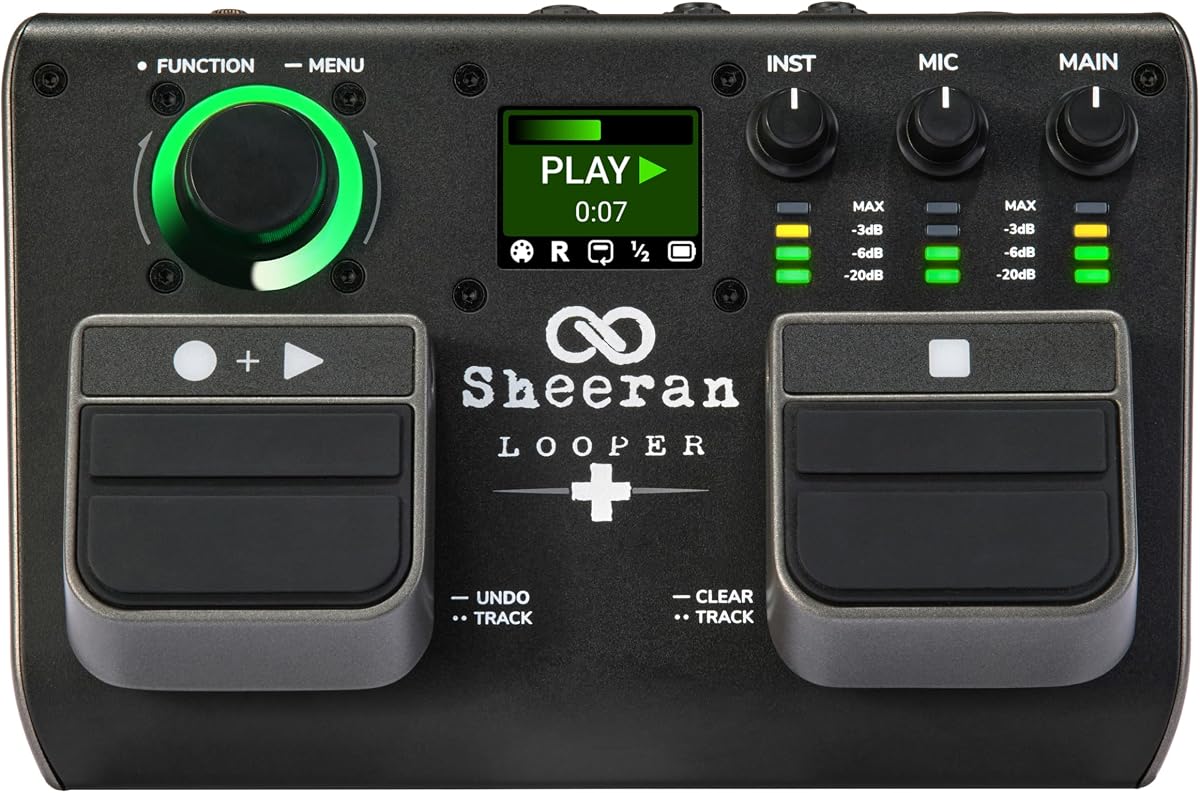
The Sheeran Looper + Dual Track offers unique dual-track functionality for complex song structures. With custom DSP and 32-bit audio quality, it delivers professional sound. It also functions as a USB audio interface for direct recording.
We may earn a commission when you buy through this link, at no additional cost to you.
Its rugged steel chassis ensures durability on stage. With over 6 hours battery life on AA batteries, it is reliable for long gigs. The full-color display provides clear loop status feedback.
The higher price reflects its advanced dual-track design. Learning the four modes takes time, but this flexibility rewards serious performers. It suits solo artists needing layered arrangements.
If you need dual-track looping and USB interface capability, this model is excellent. It balances performance features with reliability, making it a strong choice for professional solo acts.
Dual track modes allow independent loop control, enabling complex layered performances without external gear.
Built-in USB audio interface lets you record directly to a DAW, simplifying your production workflow.
We may earn a commission when you buy through this link, at no additional cost to you.
The TC Electronic DITTO LOOPER is a classic choice for simple looping tasks. With unlimited overdubs and undo/redo, it offers enough flexibility for basic use. Its true bypass design preserves your guitar tone when not looping.
We may earn a commission when you buy through this link, at no additional cost to you.
Recording 5 minutes is sufficient for jamming and practice. The analog-dry-through ensures your dry signal remains untouched. Users appreciate its reliability and intuitive one-button operation for quick setups.
The limitation is the lack of memory storage and shorter loop time. However, for musicians prioritizing tone preservation and simplicity, it is an ideal option. It remains a staple on many pedalboards.
If you need straightforward looping without complex features, the DITTO LOOPER delivers. It focuses on core functionality and tone quality, making it a timeless option for guitarists.
True bypass ensures your dry tone remains unaffected, maintaining your original sound integrity.
Undo redo capabilities let you correct mistakes quickly, enhancing flexibility during live play.
We may earn a commission when you buy through this link, at no additional cost to you.
The BOSS RC-600 is a powerhouse for musicians needing multi-track recording and extensive memory. It offers 6 stereo phrase tracks and 2 XLR microphone inputs for vocal integration. With 99 phrase memory presets, you can store complex arrangements.
We may earn a commission when you buy through this link, at no additional cost to you.
Professional audio quality ensures your loops sound pristine. The rhythm guide helps keep timing accurate. It connects seamlessly with other gear through multiple inputs and outputs for flexible stage setups.
The high price reflects its professional capabilities. It requires a power adapter which may be an added cost. For touring professionals, this investment pays off through reliability and advanced features.
If you demand multi-track flexibility and XLR inputs, the RC-600 is unmatched. It is built for serious performers requiring comprehensive looping and integration options for full-band setups.
XLR inputs let you loop vocals alongside instruments, enabling one-man-band performances.
99 phrase memory slots allow extensive library organization for large repertoires.
We may earn a commission when you buy through this link, at no additional cost to you.
The FLAMMA FF20 combines a looper with a drum machine, ideal for solo performers. It offers 300 minutes of recording and 220 drum grooves across 11 styles. The full-color screen displays all essential parameters clearly.
We may earn a commission when you buy through this link, at no additional cost to you.
Time stretch allows adjusting playback speed without affecting pitch, enhancing flexibility. Headphone output enables silent practice. With 100 loop slots, you have ample memory for your compositions.
Build quality feels lighter than premium units, and menu navigation can be slow. However, the versatility of drum grooves and recording time makes up for it. It is suitable for buskers and home studios.
For musicians wanting drum accompaniment in one pedal, the FF20 is a smart option. It balances essential looping features with built-in rhythm tools, providing a cost-effective all-in-one solution.
Built-in drum grooves let you practice with backing tracks, improving timing without external gear.
Time stretch lets you adjust loop speed without pitch shifts, offering creative arrangement options.
We may earn a commission when you buy through this link, at no additional cost to you.
Choosing the right live looper pedal involves evaluating several key factors that match your playing style and performance needs. This section breaks down the most important aspects to consider before you make your final decision.
Recording time determines how long you can record individual loops or how many loops you can store. For practice and small gigs, 10 to 20 minutes might suffice, but professional performances may require hours or hundreds of loop slots. Consider your typical set length and how much storage you need to avoid running out of space mid-performance.
Look for units with at least 10 minutes per loop and multiple memory slots if you plan to use complex arrangements.
Audio quality is critical for professional sounding loops. High bit depths like 24-bit or 32-bit ensure your recordings retain clarity and dynamic range. Some pedals offer analog-dry-through, which keeps your dry signal clean when looping is not active. This feature preserves your tone integrity.
Prioritize pedals with high bit depth and analog-dry-through to ensure your loops match your live tone perfectly.
The user interface dictates how quickly you can operate the pedal during a show. Simple footswitches are easy for live use, while screens offer detailed parameter visibility. Choose a balance that allows you to access features without breaking your performance flow. Color displays help with status clarity.
Select an interface that matches your comfort level and allows seamless operation during your typical use cases.
Connectivity includes inputs, outputs, and integration with other gear. Look for stereo I/O, MIDI support, and USB for file transfers. If you sing while looping, XLR inputs are valuable. These options ensure your pedal integrates with your wider signal chain and computer.
Ensure the pedal supports stereo inputs, MIDI, and USB for flexibility in your setup.
A looper pedal used on stage must withstand physical stress. Metal chassis and high-quality switches resist wear over time. Check user feedback regarding longevity and reliability. This ensures your gear lasts through tours and gigs without failure.
Choose models with metal bodies and robust switches for maximum durability.
Power options affect how you set up your pedalboard. Some pedals run on batteries, others on 9V adapters. Battery operation is useful for busking but adds cost. Lightweight designs are easier to transport. Consider both power source and weight for your typical usage environment.
Balance battery convenience with adapter reliability based on where you perform most often.
Price varies from budget-friendly units to premium multi-track models. Identify which features you truly need to avoid overspending. Higher cost often brings better sound and more controls, but a simpler unit may serve you well. Assess your financial limits alongside feature requirements.
Focus on essential features within your budget to get the best value.
Extras like built-in tuners, drum machines, or undo/redo capabilities add convenience. Tuners help stay on pitch quickly, while undo/redo helps fix mistakes on the fly. These features enhance usability but may complicate the interface. Determine which extras support your workflow.
Evaluate extra tools like tuners or undo features based on how much they simplify your routine.
Start by connecting your instrument to the input and the pedal to your amp or interface. Select the recording mode and press the footswitch to begin recording your first loop. Listen carefully to ensure the timing is correct before overdubbing. Most pedals use a single footswitch to record, play, and overdub.
To overdub, wait for the loop to cycle back to the start point and press the footswitch again. This adds a new layer to your existing loop. Use undo features if needed to remove a mistake. Regular practice improves timing and layering skills over time.
Keep the pedal clean and free from dust or debris. Store it in a protective case when not in use to avoid physical damage. Use a power supply that meets the voltage and current requirements to ensure stable operation. Check cables regularly for wear to maintain signal quality.
For beginners, the BOSS RC-1 is ideal because it is simple to use and affordable. It offers essential recording functions without complex menus, making it easy to learn basics. The built-in LED indicator helps track loop status clearly. If you want more features but still ease of use, the TC Electronic DITTO LOOPER is also a great starting point.
Yes, many advanced looper pedals support microphone inputs directly. Models like the BOSS RC-600 offer XLR inputs for vocal looping alongside instruments. Others require external audio interfaces to mix microphones with your guitar. Check if your pedal includes mic inputs or has stereo inputs that can accept line-level mic signals.
Most modern pedals have memory slots to save loops for later recall. Units like the BOSS RC-5 and NUX Loop Core provide 99 memory slots where you can store phrases. Some also allow saving loops via USB to a computer. Always save your loops after recording to avoid losing work when the pedal is turned off.
Basic looping is quite simple and requires only footswitch timing to start and stop recordings. Advanced features like layering and editing may take practice to master. Most pedals provide intuitive footswitch layouts to minimize complexity. Regular use builds familiarity and confidence for live performance use.
Stereo looping provides two audio channels for a wider soundstage, while mono uses one channel for simplicity. Stereo is better for immersive live sounds or complex arrangements, while mono works for simpler setups. Check your pedal's inputs to ensure it supports stereo if needed. Some pedals offer stereo inputs and outputs for enhanced routing.
Most pedals require a 9V power supply for consistent operation. Some can run on batteries for portability but draining them during a show is risky. Always carry a compatible power adapter and cables. Using a reliable power source prevents signal issues and ensures your pedal stays on during performances.
Yes, you can connect different instruments to the same pedal sequentially or via multiple inputs if available. Stereo pedals allow you to switch between instruments without unplugging. Ensure you adjust levels when changing instruments to avoid sudden volume changes. Some pedals allow MIDI control to switch presets for different instrument settings.
Live-ready pedals should have robust construction, reliable footswitches, and memory storage for recall. Quick access to undo/redo helps recover from mistakes on stage. Built-in monitors or headphone outs help with monitoring without extra gear. Choose units with simple visual indicators or color screens to track status easily.
In this guide, we reviewed ten live looper pedals ranging from beginner-friendly units to advanced professional models. The BOSS RC-5 and RC-600 stand out for their audio quality and advanced features, while the LEKATO pedals offer excellent budget-friendly options. Each choice caters to different skill levels and performance needs.
Prioritize features like recording time, connectivity, and ease of use based on your specific goals. If you need vocal support, look for XLR inputs, and if simplicity is key, opt for one-button designs. Consider your budget carefully and ensure the pedal fits your existing gear setup seamlessly.
Remember that prices and availability change frequently so always verify current listings before purchasing. We hope this guide helps you find the perfect looper pedal to enhance your musical creativity. Happy looping and enjoy the journey of building your own soundscapes.