
FotoZ Macro Conversion Lens
4.6Editor score
Universal 37mm to 72mm compatibility
3-element 3-group optical design
Tool-free instant snap-on installation
Discover the best Macro Lens for Insect Photography options available in October 2026. We compare top-rated lenses for smartphones and cameras to help you
Capturing the intricate world of insects requires specialized equipment that can reveal details invisible to the naked eye. A high-quality macro lens allows photographers to focus closely on tiny subjects like wings and eyes while maintaining sharp clarity.
We evaluated ten distinct macro solutions ranging from smartphone attachments to dedicated camera optics. Our analysis focused on optical performance, magnification capabilities, build quality, and ease of use for various shooting scenarios.
Each product in this guide offers unique strengths suited to different budgets and skill levels. Please note that availability and pricing may change over time, so verify current details before making your final purchase decision.
4.6Editor score

4.7Editor score
4.6Editor score
The following table provides a side-by-side overview of key specifications for each reviewed product to help you quickly identify the best fit for your specific camera system and photography goals.


The Canon RF100mm F2.8 L Macro lens stands out as the premier choice for serious insect photographers using Canon EOS R systems. With a world-first 1.4x magnification ratio, it reveals microscopic details that other lenses simply cannot capture.
We may earn a commission when you buy through this link, at no additional cost to you.
Its hybrid image stabilization compensates for both angular and shift camera shake, which is crucial when working at extreme magnifications. The Spherical Aberration control ring allows you to adjust the look of your foreground and background blur creatively.
While the price is significantly higher than other options, the image quality justifies the investment for professionals. The lens is heavy compared to non L models, which might be a consideration for long field sessions.
If you own a Canon RF camera and demand the highest fidelity for insect photography, this lens is the definitive choice. It transforms the way you capture the small world with precision and clarity.
The 1.4x magnification allows you to see details on insect wings and eyes that are typically invisible without specialized equipment.
The dedicated control ring lets you shape the bokeh to suit your artistic vision, enhancing the separation between subject and background.
We may earn a commission when you buy through this link, at no additional cost to you.
The FotoZ Macro Conversion Lens offers an incredibly accessible entry point for those wanting to try macro photography without buying a dedicated lens. It transforms your existing lenses into close-up tools with a simple screw-on mechanism.
We may earn a commission when you buy through this link, at no additional cost to you.
This kit includes adapter rings for a wide range of filter threads from 37mm to 72mm, making it versatile for many DSLR and mirrorless users. The spring-loaded adapter ensures a secure fit without needing extra tools.
While it does not match the sharpness of premium lenses, it provides good results for casual shooters. The main limitation is that you lose the ability to focus on distant subjects once the attachment is on.
For hobbyists or those on a tight budget, this conversion lens is an excellent way to start capturing insect details. It is practical, portable, and easy to remove when you need to shoot normally again.
The included rings ensure compatibility with many common lenses, allowing you to experiment with macro photography on gear you already own.
The tool-free design means you can switch between macro and standard shooting in seconds, keeping you ready for fleeting insect moments.
We may earn a commission when you buy through this link, at no additional cost to you.
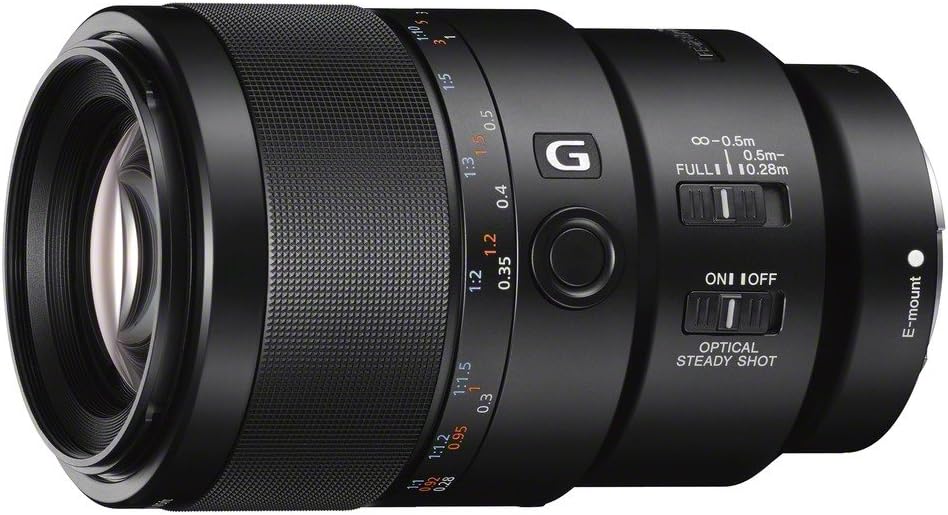
The Sony FE 90mm F2.8 Macro G is a flagship lens designed for professionals who require the highest optical performance. Its Nano AR coating effectively suppresses reflections, ensuring clean images even in challenging lighting conditions.
We may earn a commission when you buy through this link, at no additional cost to you.
Direct Drive SSM provides quiet and precise focusing, which is essential when photographing skittish insects that might flee from motor noise. The dust and moisture resistance gives you confidence when shooting outdoors in variable weather.
The lens offers a comfortable working distance thanks to its 90mm focal length, allowing you to get close to subjects without casting shadows. Optical Steady Shot image stabilization ensures sharp handheld shots at high magnifications.
This lens is ideal for serious photographers who need reliable, top-tier optics for insect photography. Its build quality and image performance make it a standout choice in the Sony ecosystem.
This advanced coating minimizes internal reflections and flare, resulting in higher contrast and color fidelity in your macro shots.
The resistant design protects the internal elements from dust and moisture, allowing for worry-free shooting in humid or dusty environments.
We may earn a commission when you buy through this link, at no additional cost to you.
The TTARTISAN 40mm f/2.8 is a manual focus prime lens designed for Sony E-mount APS-C cameras. It delivers a 1:1 magnification ratio and a creamy background blur due to its 11-blade aperture design.
We may earn a commission when you buy through this link, at no additional cost to you.
Built with a sturdy all-metal construction, it feels robust yet remains lightweight at just 13.1 oz. This makes it an excellent choice for travel and nature exploration where weight matters.
Since it is manual focus, you have full control over the focusing distance, which can be beneficial for precise macro work. However, this requires more patience and steady hands compared to autofocus options.
For photographers willing to work manually to save cost, this lens offers exceptional value. It provides the optical characteristics of a dedicated macro lens at a fraction of the price.
With 7 groups and 8 elements including dual LD glass, the lens minimizes aberrations to provide sharp images across the frame.
The 11-blade aperture creates smooth, circular bokeh that helps isolate your insect subjects from busy backgrounds effectively.
We may earn a commission when you buy through this link, at no additional cost to you.
The Canon RF35mm F1.8 is a compact macro lens that offers a 0.5x magnification ratio. It is versatile for everyday shooting while still being capable enough for basic macro needs.
We may earn a commission when you buy through this link, at no additional cost to you.
With a minimum focusing distance of 0.17 meters, it gets reasonably close to subjects, though not as close as true 1:1 lenses. The optical image stabilization helps counteract camera shake for sharper handheld results.
The control ring allows direct setting changes without digging through menus, which speeds up workflow. Its small size makes it easy to carry around for quick shots without bulk.
If you need a lens that can handle both portraits and close-ups, this is a great multi-purpose option. It is not specialized for extreme insect work but serves well for general macro tasks.
The control ring can be customized to adjust aperture or ISO, giving you quick access to settings while keeping your eyes on the viewfinder.
Up to 5 stops of shake correction ensure you can shoot at slower shutter speeds without blur, improving your success rate in low light.
We may earn a commission when you buy through this link, at no additional cost to you.
This kit provides four close-up filters with different diopter strengths ranging from +1 to +10. They are designed to work with lenses that have a 67mm filter thread, making them a flexible tool.
We may earn a commission when you buy through this link, at no additional cost to you.
The filters are double threaded, meaning you can stack them to create custom magnification levels. This allows you to achieve stronger zoom effects without buying multiple lenses.
While they are convenient and affordable, using stacked filters can introduce some optical aberrations or softness. It is best to start with a single filter to test image quality before stacking.
For those who already have a 67mm lens, this kit offers a versatile way to experiment with macro photography. It is a practical accessory for travel where carrying multiple heavy lenses is not feasible.
You can combine filters like +1 and +4 to create a +5 diopter effect, allowing for more powerful close-up work with one kit.
The included nylon filter pouch keeps the small glass elements safe and organized, ensuring they are ready for your next shoot.
We may earn a commission when you buy through this link, at no additional cost to you.
The Xenvo Pro Lens Kit offers a 15x macro lens designed to work with almost any smartphone. It comes with a clip, LED light, and case to make setup simple and portable.
We may earn a commission when you buy through this link, at no additional cost to you.
The TruGrip lens clip aims to hold the lens securely to your phone camera. The GlowClip rechargeable LED light helps illuminate subjects in low light conditions which is vital for macro shots.
While the lens provides high magnification, achieving a perfect alignment on your phone sensor can sometimes be tricky. The case helps protect the components when traveling to different locations.
If you want to capture insect details with your phone, this kit provides a comprehensive solution. It eliminates the need for separate lighting and storage while enabling close-up photography on the go.
The GlowClip provides continuous warm light that improves exposure and color without washing out the subject like a standard flash.
This kit works with all iPhones, Samsung, and other major Android models, making it accessible for a wide range of mobile users.
We may earn a commission when you buy through this link, at no additional cost to you.
The APEXEL 100Ultra Macro Lens is a smartphone attachment that offers 10X magnification for capturing intricate details. It is designed to fit most phones including the latest iPhone and Samsung models.
We may earn a commission when you buy through this link, at no additional cost to you.
Its lossless magnification technology ensures that clarity is maintained even at high zoom levels. The F1.05 aperture allows for better light intake and depth of field management in various conditions.
Users should be prepared to align the lens carefully to avoid vignetting or blurry areas. The clip mechanism is simple but may require adjustment to keep the lens stable during use.
This lens is an excellent tool for mobile photographers looking to explore the macro world without buying a camera. It is versatile, affordable, and easy to carry anywhere you have a phone.
The 10X magnification allows for close-up shots that reveal textures and structures on insects that are typically unseen by the eye.
The multi-lens combination boosts light transmittance to minimize reflections and flare for brighter and sharper imagery.
We may earn a commission when you buy through this link, at no additional cost to you.
The ULANZI CL-003 is a HD 75mm phone camera lens that mimics the look of professional DSLR optics. It features a tele-focusing operation that lets you control the shooting distance with a focus ring.
We may earn a commission when you buy through this link, at no additional cost to you.
Constructed with aluminum alloy and a non-slip texture, it feels durable and comfortable to hold. The precision optical design aims to reduce distortion and increase light throughput for clearer images.
It includes a universal 17mm adapter which works with specific phone cases or cages. This setup provides a more stable mounting point than a simple clip-on attachment.
For mobile users who want a more robust and stylish macro solution, this lens is a strong choice. It bridges the gap between casual and professional mobile photography aesthetics and function.
The 45~90mm focusing range allows you to adjust the distance to your subject without moving your body for flexible framing.
The new lens combination captures clear and wonderful images with less distortion and better light transmission than older models.
We may earn a commission when you buy through this link, at no additional cost to you.
The AstrHori 25mm F2.8 is an ultra macro lens that offers a massive 2-5x magnification range for life-size proportions. It is specifically tailored for full-frame Sony E-mount mirrorless cameras.
We may earn a commission when you buy through this link, at no additional cost to you.
Because it is a wide-angle configuration, it provides greater depth of field compared to telephoto macro lenses. This ensures sharp focus on more of your subject even at high magnifications.
It does not support infinity focus so you cannot shoot landscapes with it. However, its slim design makes it easy to carry and maneuver when you are looking for tiny subjects in the field.
For macro enthusiasts who want extreme magnification without a large lens, this is a unique tool. It requires manual focus skills but rewards you with incredible detail in your insect photos.
The 2:1 to 5:1 magnification range captures imagery that surpasses life-size proportions, ideal for detailed and close-up shots.
The wide-angle design optimizes focus depth ensuring sharp and detailed focus on subjects for enhanced image quality.
We may earn a commission when you buy through this link, at no additional cost to you.
Selecting the right macro lens depends on your camera system, budget, and specific goals. Below are key factors to consider when making your choice.
The magnification ratio indicates how large a subject will appear on the camera sensor. A 1:1 ratio means the subject is life size on the sensor. Higher ratios like 2:1 or 5:1 allow for extreme close-ups essential for insect photography.
Look for at least 1:1 magnification for true macro work. If you want to see minute details like eye facets, consider lenses offering higher ratios.
Focal length affects your working distance. Longer focal lengths like 90mm or 100mm allow you to stay further away from insects. This prevents scaring them off and reduces shadows on the subject.
For insect photography, a focal length between 90mm and 100mm is often ideal. Shorter lengths may require you to get too close.
Aperture controls the amount of light entering the lens and the depth of field. A wider aperture like f/2.8 helps in low light and creates nice background blur. However, smaller apertures may be needed for more depth of field.
An aperture around f/2.8 to f/5.6 is standard for macro lenses. Ensure it supports enough light for your typical shooting environments.
At high magnifications, even slight camera shake can cause blur. Image stabilization helps counteract this motion allowing for sharper handheld photos. This is especially useful when you cannot use a tripod.
Prioritize lenses with optical or hybrid image stabilization if you plan to shoot handheld often. It greatly improves your success rate.
Macro photography often takes place outdoors in various conditions. A durable build with dust and moisture resistance ensures longevity. Metal construction also provides better balance and stability compared to plastic.
Choose a lens with a robust build if you shoot in nature regularly. It will withstand accidental bumps and weather changes better.
Ensure the lens matches your camera mount such as Sony E, Canon RF, or Nikon Z. Mismatches can lead to incompatibility or the need for adapters that reduce performance.
Verify your camera model and mount before purchasing. Adapters may exist but native mounts offer the best electronic and optical performance.
Some macro lenses require manual focus to achieve precise sharpness. Autofocus can be faster but may struggle at close distances. Manual focus gives you full control but demands steady hands.
Consider your skill level. Beginners might prefer autofocus for ease of use while advanced shooters may enjoy the control of manual focus.
Some kits come with caps, pouches, or filters. These add value by protecting your lens and organizing your gear. A carrying case is helpful for travel and safety.
Check what is included in the box. Additional accessories can save you money later and protect your investment.
Mount your lens securely and set your camera to manual mode for full control over settings. Focus carefully using live view to zoom in on the subject and ensure sharp details.
Use a tripod or steady surface to prevent camera shake especially at high magnifications. This allows you to use slower shutter speeds without blurring the image.
Clean your lens regularly with a soft cloth and proper cleaning solution. Avoid touching glass with fingers to prevent fingerprints that can affect image quality.
For insect photography, a minimum of 1:1 magnification is recommended to capture life-size details. However, higher ratios like 2:1 or 5:1 allow for extreme close-ups of tiny features like eye structures.
While handheld shooting is possible with image stabilization, a tripod is highly recommended for stability. It eliminates camera shake and allows precise framing which is critical when working at close distances.
To avoid shadows, position your light source to the side or use a diffuser. A longer focal length lens also helps keep the camera body further away from the subject to reduce shadow casting.
Yes, extension tubes can increase magnification by moving the lens further from the sensor. They are cost-effective but may reduce light transmission and autofocus capabilities.
Autofocus can be less reliable at close distances. Many photographers switch to manual focus for precision. Some modern lenses have focus limits that speed up autofocus during macro work.
Use a soft microfiber cloth to gently wipe the front and rear elements. Avoid using harsh chemicals or blowing air directly into the mount. Store in a dry place when not in use.
In this guide, we highlighted the Canon RF100mm as the top choice for professionals and the FotoZ Conversion Lens for those on a budget. Each lens offers unique strengths depending on your camera system and needs.
Prioritize magnification and working distance when selecting your lens. These factors will determine how close you can get to insects without disturbing them. Also consider build quality for outdoor use.
Remember that prices and availability change frequently. Check current listings before making your final decision to ensure you get the best value and correct compatibility for your gear.